Search the site

SH5_8 Cultural studies, cultural identities and memories, cultural heritage

Graff-IT - Writing on the Margins: Graffiti in Italy (7th–16th centuries)

Graff-IT - Writing on the Margins: Graffiti in Italy (7th–16th centuries)
LIFI 01/A Italian Linguistics

Durata: 

Coordinator: 

Prof. Francesca Malagnini, head of the Unit at the University for Foreigners of Perugia
Dettagli del progetto
Graff-IT Project Logo

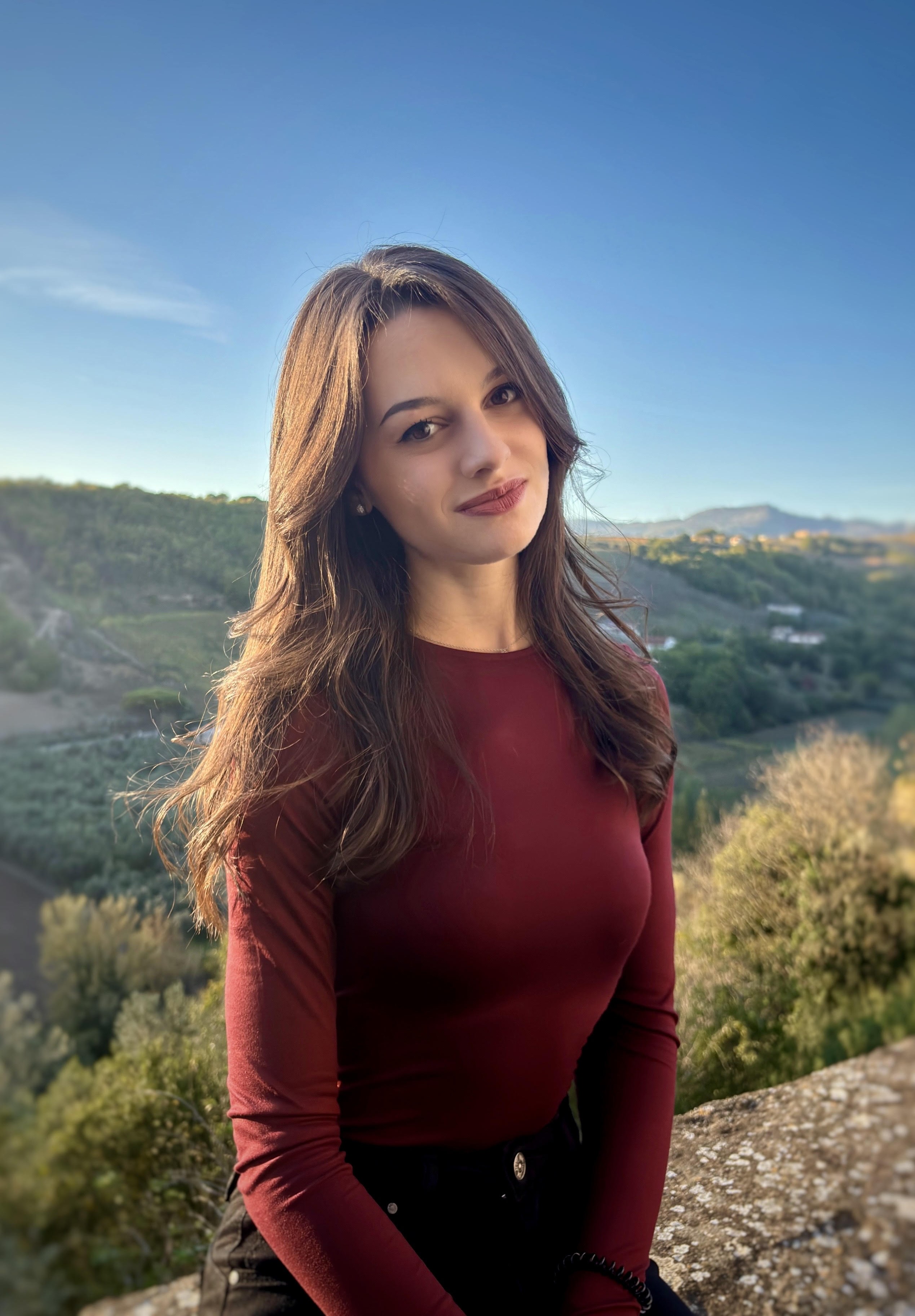
Mirella Madafferi

Close-up of the PhD student

Mirella Madafferi

Ph.D. student
XLI cycle (2025-2028)
Diplomacy and international cooperation
Ph.D. program in “Frontier Sciences in Sustainability, Diplomacy, and International Cooperation”
Department of International Humanities and Social Sciences (SUSI)

José Martí’s ideal within the Cuban revolutionary process and in Fidel Castro’s political discourse

Fidel Castro defined José Martí as the intellectual and moral author of the assault on the Moncada Barracks in 1953, placing the Cuban revolutionary action that culminated in 1959 in historical continuity with the independence processes of the late 19th century. This made it possible to define the Castro revolutionary process not as an isolated rupture, but rather as the fulfillment of national independence.
The project aims to analyze to what extent the Cuban Revolution was inspired by Marti's ideals, examining continuities and divergences in the governing practices of the Revolutionary State after World War II and within the political discourse of Fidel Castro.

Research Interests

History of colonialism in Latin America; History of contemporary Latin America; Latin American independence movements; History of Latin American political thought; José Martí; Cuban Revolution; Anti-imperialism and nationalism in Latin America; Construction of national identity in Cuba;

Serena Piccirillo

Close-up of the doctoral student

Serena Piccirillo

Ph.D. student
XLI cycle (2025-2028)
Literature, Philology, and the Arts
Doctorate in Linguistic, Philological, and Literary Studies
Department of Italian Language, Literature, and Arts in the World (LILAIM)

Between Identity and Otherness. The Muslim East and the Construction of the “Turk” in Italian Renaissance Poems (1532–1573)

The project investigates Italian chivalric poems composed and published between 1532, the year of the definitive edition of Orlando Furioso, and 1573, the period of greatest intensity in the poetic production tied to the victory at Lepanto. This chronological span makes it possible to observe, from a unified perspective, the development of the chivalric poem between Ariosto and Tasso, with particular attention to a large corpus of texts now considered "minor" or non-canonical, yet characterized by extraordinary productive vitality and a strong rooting in the editorial culture of the sixteenth century.
At the heart of the research is the way in which these poems contribute to the literary and cultural construction of the relationship between East and West, and in particular to the definition of Muslim otherness and the figure of the "Turk," in the context of Mediterranean and Ottoman-Christian conflict. The project analyzes the narrative, rhetorical, and figurative forms through which the chivalric poem helps shape an imagery of the Islamic East, relating it to the political, ideological, and religious dynamics of the period.
Special attention is given to the material and editorial dimension of the texts: the poems are considered not only as literary works, but as printed books, set within the powerful production machinery of sixteenth-century Venetian publishing.
The project thus weaves together textual analysis, study of editorial devices, and reflection on narrative and symbolic geographies, examining the role of cities, borders, and Mediterranean spaces in configuring the conflict between Christianity and Islam, and critically questioning the applicability of contemporary anthropological categories of identity and otherness to a sixteenth-century literary corpus.

Research Interests

Italian Renaissance literature; Philology of printed texts; Ariostan tradition and dynamics of reception; Chivalric poem; Literature and the construction of cultural identities.

Sandra Covino

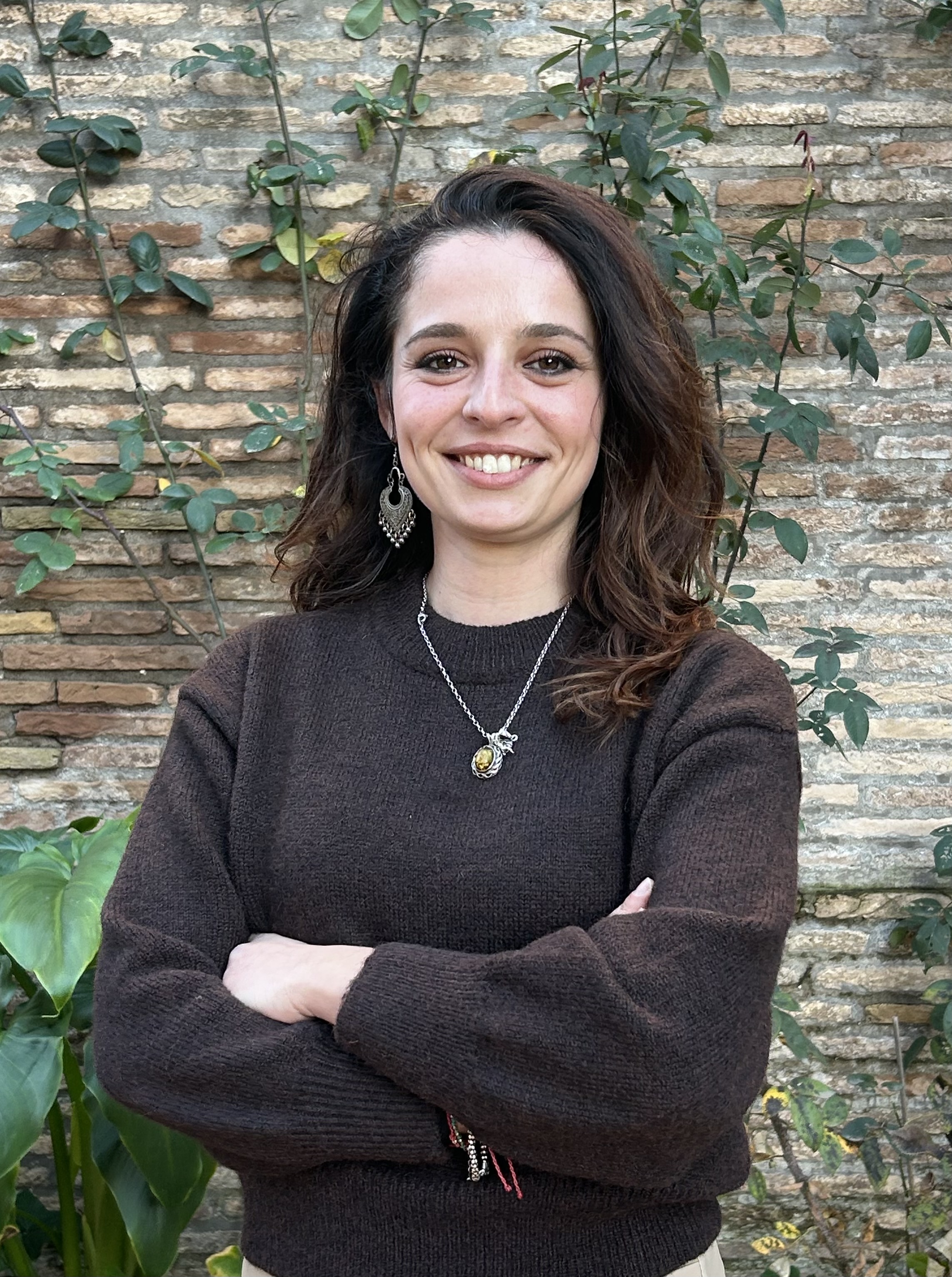
sandra covino

Sandra Covino

Professor
Full Professor
LIFI-01/A (ex L-FIL-LET/12)
Department of Italian Language, Literature, and Arts in the World (LILAIM)

Biographical Note

Sandra Covino has been a first-tier professor since 2011 in the SSD L-FIL-LET/12 (Italian Linguistics). At her current institution, she coordinated the PhD program in “Language Sciences” and then the “Linguistic and Philological Sciences” track of the Doctoral School (cycles XXV-XXVIII). She has also held various other institutional roles, including the directorship of the Department of Human and Social Sciences (2016-2017).

She has given lecture series and invited talks at many other universities in Italy and abroad (Malta, France, Spain, Portugal, Hungary, Sweden, Austria, Algeria, Norway, Greece, Switzerland, where she was also a visiting scholar at the Romanisches Seminar in Zurich).

She has participated in nationally and internationally significant research projects and is currently: 1) head of the University for Foreigners of Perugia Unit in the PRIN 2022 (call of February 2) "Scholars at War Digital Library: an Innovative Environment for Advanced Document Management. Philology, Politics, Society, from the Franco-Prussian War (1870) to the fall of the Berlin Wall (1989) and Beyond" (acronym SWarD; CUP D53D23015490006; P.I. S. Rapisarda); 2) co-directs, with M. Loporcaro and F. Franciullo, the project "Gesamtausgabe der linguistischen Schriften Clemente Merlos", funded by the Stiftung für wissenschaftliche Forschung at the University of Zurich and the Romanisches Seminar.

She has been an invited speaker at numerous scientific conferences and has organized several international conferences at the University for Foreigners of Perugia (or at other venues as a member of the scientific committee).

From 2016 to 2019, she was the representative of the Association for the History of the Italian Language (ASLI) in the Inter-Societal Coordination for the History of Linguistic and Semiotic Thought (CISPELS).

From 2013 to 2022, she was responsible for Italian in the Perugia hub of the Accademia dei Lincei project "I Lincei for a new didactics in schools: a national network".

She is a member of various scientific societies, including the "Center for Sicilian Philological and Linguistic Studies" and the "Roman Philological Society", as well as of the Italian Language Observatory at the Italian Embassy in Washington D.C. and the Scientific and Educational Council of the ICoN Consortium.

For information on her interests and scientific output, see CV and research areas.
Lessons

2026/2027

  • Linguistica italiana9 CFU

    Corso di laurea: Lingua e cultura italiana nel mondo digitale

  • Storia della lingua italiana e italiano fuori d'italia9 CFU

    Corso di laurea: Italiano per l'insegnamento a stranieri

2025/2026

  • Linguistica italiana9 CFU

    Corso di laurea: Lingua e cultura italiana nel mondo digitale

  • Storia della lingua italiana e italiano fuori d'italia9 CFU

    Corso di laurea: Italiano per l'insegnamento a stranieri

2024/2025

  • Linguistica italiana9 CFU

    Corso di laurea: Lingua e cultura italiana nel mondo digitale

  • Storia della lingua italiana e italiano fuori d'italia9 CFU

    Corso di laurea: Italiano per l'insegnamento a stranieri

2023/2024

  • Storia della lingua italiana e italiano fuori d'italia9 CFU

    Corso di laurea: Italiano per l'insegnamento a stranieri

  • Linguistica italiana9 CFU

    Corso di laurea: Digital humanities per l'italiano

  • Elementi di storia della lingua italiana6 CFU

    Corso di laurea: Digital humanities per l'italiano

2022/2023

  • Elementi di storia della lingua italiana6 CFU

    Corso di laurea: Digital humanities per l'italiano

  • Storia della lingua italiana e italiano fuori d'italia9 CFU

    Corso di laurea: Italiano per l'insegnamento a stranieri

  • Linguistica italiana9 CFU

    Corso di laurea: Digital humanities per l'italiano

Petrarch and the Reformation: Paths of a Restless Reception

Petrarch and the Reformation: Paths of a Restless Reception
L-FIL-LET/13

Durata: 

Coordinator: 

Dr. Laura REFE - Prof. Carla GAMBACORTA
Dettagli del progetto
Back to top