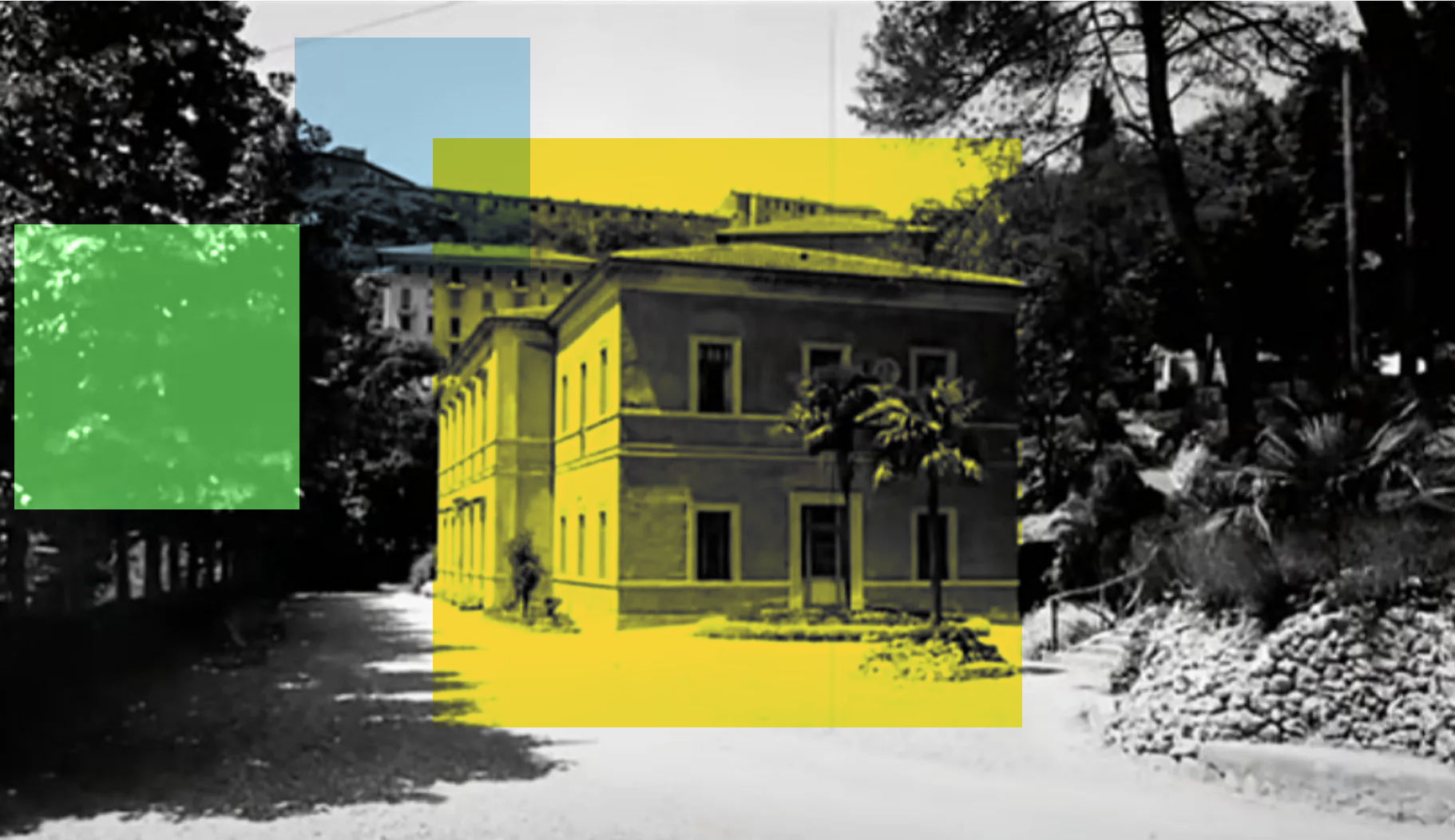
The doors of the recently renovated building will open, and it will become operational during the 2026-2027 academic year.
There will be study rooms, offices dedicated to student services, a major conference hall, a refreshment area, and other facilities accessible to the entire university community.
Speakers:
Valerio De Cesaris
Rector, Università per Stranieri di Perugia
Vittoria Ferdinandi
Mayor of Perugia
Giulia Guerrera
President of the Student Representatives Council - Università per Stranieri di Perugia
Valentina Severoni
Technical-Administrative and Library Staff - Università per Stranieri di Perugia

The origins
The building was originally constructed as one of the pavilions of the former psychiatric hospital of Perugia, located within the Santa Margherita Park. The park’s origins date back to 1303, when the “hospital” of Santa Maria della Misericordia was founded in Perugia as a place of hospitality and care for “poor invalids and pilgrims,” abandoned children, and all the “weak who are otherwise unable to provide for themselves.”
From the late 17th century, records show that people suffering from “madness” were admitted, housed in common infirmaries or in separate rooms, often alongside tuberculosis patients.
In 1920, it became the site of the administrative offices, the director’s office, the library, scientific laboratories, and accommodations for resident medical staff.

Monia Andreani
Monia Andreani, born in Perugia on December 12, 1972, and passed away in Fano on May 27, 2018, was a researcher in Political Philosophy at our University and a lecturer in Bioethics at the University of Urbino "Carlo Bo".
Monia was a key point of reference for students at the University for Foreigners of Perugia on issues such as caring for vulnerable individuals, respect for diversity, and gender equality. Through her research and teaching, she contributed to the intellectual growth of our academic community, embracing the university as a place of dialogue and encounter, a laboratory for global citizenship, and a bastion of democratic values.
We remember her for her passion and her deep attentiveness toward students.
Dedicate our new building to her means honoring her legacy and the impact she had on our university community, while reaffirming the values that inspired her civic and scholarly commitment and her passion for teaching.
This is also the first building at our University to be dedicated to a woman.