First edition - Academic Year 2026-2027

General information
The Summer School ISCiS: Smart tourism in a digital age will explore key topics related to processes linked to the theme of smart tourism in order to promote the development of tourism according to an interdisciplinary approach, aiming at the development of sustainable and resilient cities and territories through the use of the most suitable technologies according to a strategic and systemic vision. The program will include lectures led by internationally recognized researchers, providing a balanced mix of theoretical insights and practical applications through a co-working lab. Beyond the technical program, the Summer School will be an opportunity for: networking with the lecturers and other students, improving general research work skills, and enjoying a nice stay in Norcia!
Mode of delivery: the course will be held in person
Dates: 5-6-7-8-9 October 2026
Class schedule: 9:00 am - 1:00 pm and 3:00 pm - 7:00 pm
Total duration: 38 hours
Venue: Norcia - Digipass, via Solferino
Participants: maximum 20*
Cost: free registration
*10 participants will be selected by the Università per Stranieri di Perugia and 10 by the partner institutions (Villa Vigoni, Centro Italo-Tedesco per il Dialogo Europeo, Fondazione Bettino Craxi, Istituto Italiano di Studi Germanici, and Humboldt-Universität zu Berlin).
During the course, the following will be provided to participants:
- meals (lunches and dinners)
- accommodation
- round-trip transfers between Norcia and Rome Fiumicino Airport and/or main railway stations
- an experiential tasting dinner
In addition, those selected by the partner universities will have their travel expenses (by train, plane, or bus) from their home institution to the course venue in Norcia covered.
The winter school is open to graduates holding a Bachelor’s degree in any discipline or an equivalent qualification, who are interested in developing specialized expertise in the role of the Italian-German partnership in the transformations of the European and global order.
The programme also targets young professionals and officials working in the public sector, international organizations, European institutions, research centers, as well as operators in the private sector, institutional relations, and companies involved in internationalization processes and the energy and digital transitions.
The winter school aims to train participants on the transformations of European and international diplomacy, with a particular focus on the partnership between Italy and Germany in major European policies (economic, energy, and technological), providing tools to understand multilevel decision-making processes, the interaction between national interests and European governance, and the role of bilateral and supranational institutions.
This initiative also aims to develop qualified professionals able to operate in research and public policy, fostering dialogue between universities and institutions, and raising awareness of the strategic value of Italian-German cooperation for stability, innovation, and sustainable development in Europe.
The course identifies the following learning objectives:
- to provide historical, political science, and legal tools for the analysis of cooperation mechanisms between European Union member states
- to deepen understanding of the functioning of multilevel decision-making processes and the interaction between national, bilateral, and European dimensions
- to illustrate the role of institutional, economic, and strategic actors involved in shaping common policies
- to develop skills in interpreting and simulating negotiations, fostering the integration of academic knowledge with practical application
Hold a bachelor’s degree in any subject area or an equivalent qualification (bachelor degree).
The following qualifications are considered preferential, in order of importance:
- Master’s degree or equivalent (master degree)
- PhD
- enrolment in a PhD program
- possession of language certifications
Important: The following priority criteria will be applied for candidate admission:
- residence in the seismic crater area of Central Italy affected by the 2016 earthquake, as defined in Annexes 1, 2, and 2-bis of Decree-Law of 17 October 2016, no. 189, converted into law on 15 December 2016, no. 229
- chronological order of receipt of applications
- carefully read the admission notice (to be published soon)
- submit the application for admission (using the form that will be published with the notice)
Monday, 5 October
- History of German-Italian Cooperation
09:00 - 13:00
Federico Niglia, Full Professor of History of International Relations (SSD GSPS-04/B), Università per Stranieri di Perugia - Sustainability Governance and Industrial Transition in Europe: The Italian-German Perspective
15:00 - 19:00
Marzia Traverso, Full Professor and Head of Institute (INaB) at the Institute for Sustainability in Civil Engineering, RWTH Aachen University
Tuesday, 6 October
- Diplomacy on Resources, Sustainability and the Green Transition
10:00 - 12:00
Francesco Asdrubali, Full Professor of Environmental Applied Physics (SSD ING-IND/11), Università per Stranieri di Perugia - Italy, Germany and the Politics of the EU
15:00 - 19:00
Matteo Scotto, Director of the Research and Project Department, Villa Vigoni German-Italian Centre for European Dialogue
Wednesday, 7 October
- Cultural Diplomacy
09:00 - 13:00
Luca Crescenzi, Full Professor of German Literature (GERM-01/B), Ca’ Foscari University of Venice - Cultural Transfer, Literature and Intellectual Exchange between Italy and Germany
15:00 - 19:00
Esther Schomacher, Professor of Italian Literature and Cultural Studies, Institute of Romance Studies, Humboldt University of Berlin, Germany
Thursday, 8 October
- Public Diplomacy
08:00-14:00
Giovanni Battista Bronzini, PhD candidate, SUSI Department – Università per Stranieri di Perugia - Technological and Industrial Diplomacy
15:00-19:00
Lucrezia Ranieri, RTT, Department of Social, Political, and Cognitive Sciences – University of Siena
Friday, 9 October
- Digital Diplomacy
10:00-13:00 and 14:00-20:00
Alessia Chiriatti, Researcher and Programme Lead for Training – Istituto Affari Internazionali (IAI)
Scientific Director
Luigi Mundula (University for Foreigners of Perugia - Course Coordinator)
Scientific Committee
Luigi Mundula (University for Foreigners of Perugia)
Carlos Pineda (University of Murcia)
Sonia Grotz (PAR University)
Norberto Santos (University of Coimbra)
Rosa Marcela Ramos Hidalgo (University of Murcia)
Magdalena Duda-Seifert (University of Wroklaw)
Scientific Director
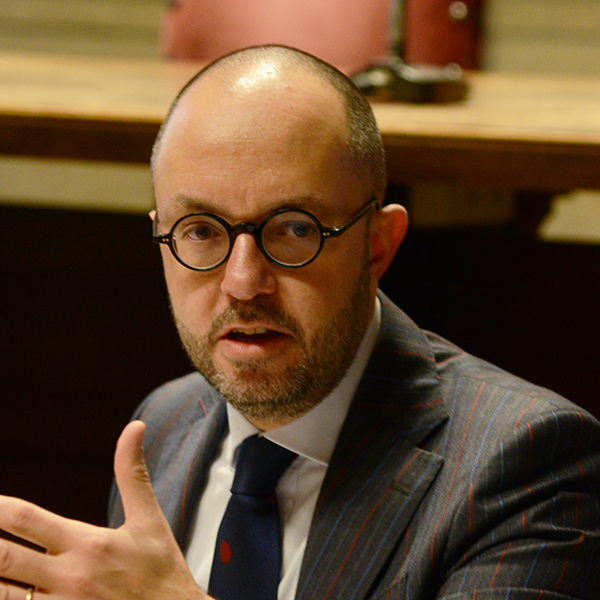
Scientific Committee
Prof. Federico Niglia, Scientific Director - Università per Stranieri di Perugia
Prof. Chiara Biscarini, Università per Stranieri di Perugia
Prof. Francesco Asdrubali, Università per Stranieri di Perugia
Prof. Luca Crescenzi, Università Ca’ Foscari Venezia