
Degree Programme accredited by the National Council of Italian Journalists (CNOG) for the awarding of professional training credits (CFP).


The programme will enable participants to:
- critically update knowledge and skills for the journalistic profession in an international context, with particular focus on the European sphere
- acquire advanced knowledge in the main thematic areas of professional innovation, developing adaptability and resilience
- enhance the ability to analyse and interpret issues at the centre of public debate in contemporary Western societies
- gain the skills needed to address the digital transformation of journalism and its increasing international outlook
- develop skills in building stable and engaging relationships with different forms of connected audiences, valuing the role of journalistic mediation
- broaden professional competences in relation to the institutional settings and communication environments in which they may be applied
The master's programme is primarily intended for professional and freelance journalists, as well as for anyone interested in entering the profession and seeking comprehensive training.
The project addresses:
- the professional challenges arising from global transformations and the digital transition
- the needs of those aiming to enter the profession
- the goals of individuals seeking to advance or enhance their ongoing careers
The multidisciplinary programme is designed to respond to new demands for knowledge and skills that have emerged in the current transformation of the global context and the journalistic profession, fostering the diversification of professional competences in relation to the institutional fields and communication environments where information professionals can develop or consolidate their careers.
The attainment of the first-level Master’s degree in “Contemporary Journalism” allows direct entry into the second year of the Master’s Degree Programme in International Relations and Development Cooperation (RICS) at the Università per Stranieri di Perugia, provided that the admission requirements for the Master’s Degree Programme are met. Please check the requirements on the RICS programme page.
In fact, recognising 42 ECTS credits, Master’s participants who meet the above requirements and wish to enrol in the Master’s Degree Programme must acquire the remaining 78 ECTS credits— including those required for the thesis— by passing all outstanding exams, including those of the first year, to complete the degree.
Bachelor’s degree or pre-reform degree awarded under the system prior to Ministerial Decree 509/99.

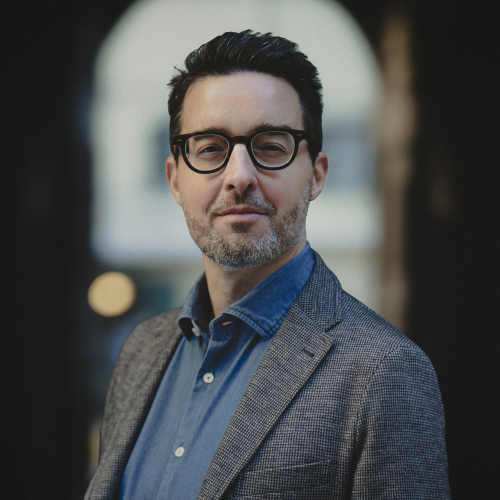
Scientific Director
Borbala Samu
curriculum vitae
Executive Committee
Prof. Borbala Samu, Associate Professor in Modern Language Teaching
Prof. Stefania Scaglione, Associate Professor in Glottology and Linguistics
Dr. Nicoletta Santeusanio – Expert Language Collaborator
Scientific Director
Scientific Committee
Francesco Asdrubali, Full Professor of Environmental Technical Physics (ING-IND/11)
Luca Benedetti, President of the Order of Journalists, Regional Council of Umbria for the three-year period 2025-2028
Valerio De Cesaris, Full Professor of Contemporary History (M-STO/04)
Maura Marchegiani, Associate Professor of International Law (IUS/13)
Rolando Marini, Full Professor in the field of Sociology of Cultural and Communication Processes GSPS-06/A
Donatella Miliani, professional journalist and writer, Umbria correspondent for Corriere della Sera and deputy head of the Umbria edition of La Nazione
Paolo Morozzo della Rocca, First level Professor in the disciplinary area of Private Law GIUR-01/A (formerly IUS/01)
Federico Niglia, Associate Professor of History of International Relations (SSD SPS/06)
Stefania Tusini, First level Professor in Social Sciences Epistemology GSPS-05/A (formerly SPS/07)
First edition A.Y. 2026-2027
Period of implementation
October 2026 – June 2027
Application deadline
17 September 2026 at 1:00 pm
Cost
€2,000.00
Mode of delivery: online (live classes via Microsoft Teams)
Commitment: part-time (classes on Fridays and Mondays)
Class schedule: 9:00 am - 1:00 pm / 2:00 pm - 6:00 pm
Programme period: from 15 October 2026 to 30 June 2027
Total duration: 1,500 hours
Fee: €2,000, payable in three instalments
Participants: minimum 25 – maximum 80
Language: Italian
The programme is organised into 8 teaching blocks, as outlined below:
Module 1 – New Developments in International Relations GSPS-04/B (formerly SPS/06)
Module 2 – Journalism in the Digital Transition: Risks and Opportunities GSPS-06/A (formerly SPS/08)
Module 3 – Immigration: History, Regulatory Frameworks and Narratives GSPS-05/A (formerly SPS/07)
Module 4 – Sustainability, Green Transition and Circular Economy IIND-07/B (formerly ING-IND/11)
Module 5 – A New Substantive Code of Ethics: Use of Data, AI and Social Responsibility in Journalism IINF-05/A (formerly ING-INF/05)
Module 6 – Science and Cultural Communication: Contexts, Practices and Innovation GSPS-06/A (formerly SPS/08)
Module 7 – English Language for Journalism ANGL-01/C (formerly L-LIN/12)
Module 8 – The European Public Sphere: Politics, Civil Society and Media GSPS-02/A (formerly SPS/04)
The national commission of the CNOG (National Council of the Order of Journalists) has granted the Master's Programme 6 professional training credits (CFP). The Order itself will award credits to journalists registered in the professional register who obtain the qualification.