Academic year 2025-2026 - XLI cycle
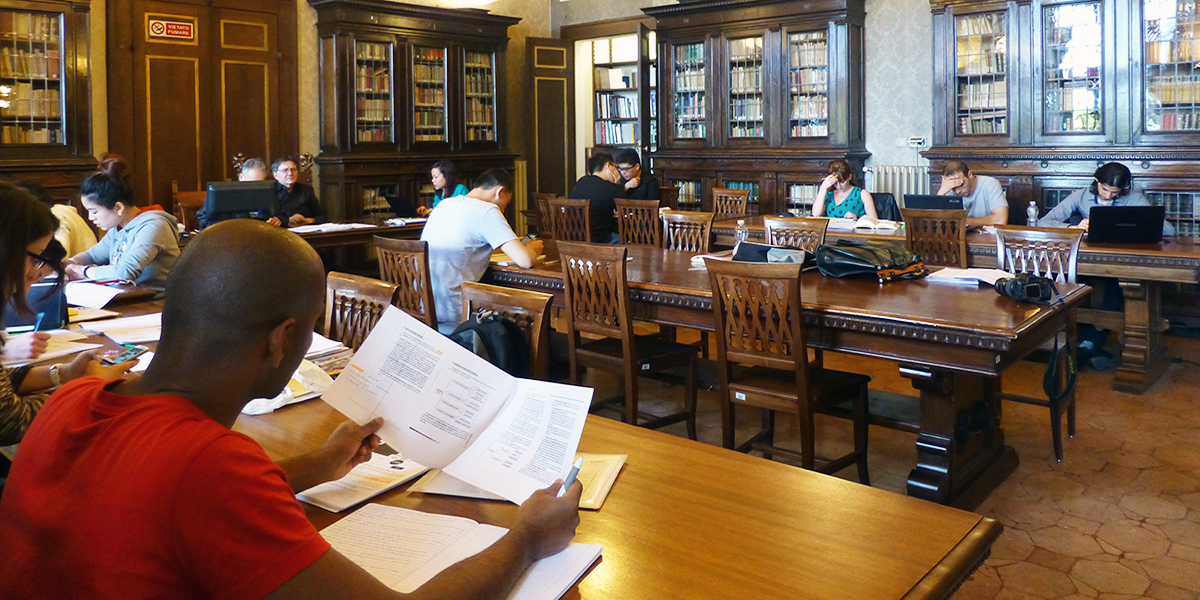
The PhD course in Linguistic, Philological, and Literary-Artistic Studies is part of the Department of Language, Literature and Arts in the World (LiLAIM) and represents the ideal continuation of the academic research path from the previous two university cycles. The course is structured into two curricula and reflects the main areas of research and teaching: linguistics, philology, and literary-artistic studies.
The course enhances the main fields of study, starting from the sectors that focus on teaching, on the study – from both diachronic and synchronic perspectives – and on the promotion of the Italian language worldwide, as well as on Italian in migration contexts. These research lines aim to offer a specialized training program, which takes shape in the areas of historical, theoretical, descriptive and applied linguistics (acquisitional and corpus linguistics), glottodidactics (theories, practices and educational policies), and Italian linguistics (Italian and its varieties, dialects and minority languages, sociolinguistics, language contact, as well as the study of processes of formation and evolution of Italian), also in relation to the use of digital technologies.
Other important fields include the study of Italian linguistic, textual, and literary tradition from its origins to the present day (the tradition of the classics, literary criticism and theory), and the field of philology (Italian, Medieval Latin, and Romance traditions), which is expressed through investigations into paraliterary, documentary and editorial forms as well.
These paths are part of the broader project to promote Italy’s linguistic heritage worldwide, which is combined with the study of its artistic and audiovisual expressions from the Middle Ages to the present day.
The educational goal of the course is to train highly qualified young researchers who are able to:
- acquire methodologies to compare scientific experiences of theoretical models from different disciplinary and professional backgrounds
- analyze and critically compare diverse sources and materials with independent judgment
- use the most up-to-date tools for specific scientific research, working effectively in both national and international contexts
- actively contribute with innovative results to the main research areas of the LiLAIM Department
At the end of the PhD program, students should be able to:
- know the main genres of writing and dissemination related to research and understand the theoretical approaches and methodologies underlying the disciplines of both curricula
- use the analytical and empirical research tools specific to the reference disciplines to address innovative questions from the professional world and join international research networks
- apply knowledge and understanding, particularly regarding the tools necessary to submit articles to scientific journals (especially open access and top-ranked journals)
- submit research projects to scientific committees, also in order to obtain funding and continue postdoctoral research;
- present their research results in public
The PhD program will primarily facilitate access to an academic career in the specific fields of the two curricula—also thanks to participation in research projects with national and international universities, some of which are already active at the University—as well as teaching in schools in Italy and abroad, in Italian Cultural Institutes abroad, and in cultural organizations for the preservation of Italy's cultural heritage both in Italy and abroad.
It also aims to provide specific skills that can be utilized in various sectors of public administration and private service companies, in the following professional activities:
- teaching in lower and upper secondary schools
- teaching Italian language and Italian as L2/LS in public and private institutions
- linguistic and cultural promotion (and simplification) in public and private organizations (Italian cultural centers; companies organizing and managing cultural events, national and international tourism bodies, non-profits)
- training, mediation, and consultancy in public and private institutions, foundations, requiring linguistic and language-teaching expertise, and drafting texts of various types
- design and management of archives and databases, and development of educational and linguistic-cultural projects
- archiving and management of books and documents in libraries and documentation centers
- editing and publishing design in the fields of print and multimedia publishing
In line with the career opportunities identified by the PhD board, the Advisory Board was established, including members employed in foundations, cultural academies, museum management, and publishing houses, to guide PhD students toward highly specialized professional roles.
Curricula
The curriculum is focused on language in its various forms and aims to offer a specific training program in the areas of historical, theoretical, descriptive, and applied linguistics, language teaching, Italian linguistics, and the teaching of modern languages. In these fields, the curriculum provides the necessary skills for research through a critical and interdisciplinary approach to linguistic analysis from theoretical, descriptive, educational, acquisitional, social, computational, and historical perspectives.
The main focus of the curriculum is a targeted attention to Italian and its varieties: the curriculum is enriched by the presence of Italian linguistics, which deals specifically with Italian—in both diachronic and synchronic terms—and its varieties, dialects, and minority languages, with reference to written and spoken texts (both literary and non-literary), as well as those transmitted by the media.
Some research topics included in the curriculum are: the study of graphic, phonological, morphosyntactic, typological, lexicological and lexicographical, grammaticographical, psycholinguistic, textual, pragmatic, and discourse aspects; the exploration of sociolinguistic aspects and those related to language variation, multilingualism, and language contact; language and educational policies; the Italian language of migrants; the study of first and second/additional language acquisition (L1 and L2/FL); linguistic analysis through different textual genres (academic, political, media discourse, etc.); corpus linguistics; the analysis of aspects related to teaching, assessment, and language education; empirical assessment of the effects that different pedagogical approaches have on learning; the teaching of modern languages through language technologies.
The curriculum focuses on the Italian linguistic, textual, and literary tradition, from its origins to the present day, from a philological and historical-cultural (heritage) perspective, with particular attention to Italian outside Italy, its connection with the arts, and its didactic applications.
The main research areas of the curriculum are as follows:
- historical and critical research on Italian literature, focusing on the spread of literature, language, and Italian cultural models within the peninsula and beyond, through the study of the historical, social, and publishing processes involved, as well as the textuality of artistic and multimedia expressive forms
- research in language history, which, in constant dialogue with philological research, focuses on the linguistic and textual analysis of written evidence—literary and otherwise—produced inside or outside the Peninsula, in ancient or modern varieties of Italian, with attention both to the relationship between linguistic data and textual types, and to the historical-cultural and social context of their evolution
- philological research, aiming to develop advanced methodological skills for studying textual traditions, geared toward the verified or critical edition of Italian texts and their commentary, through the study of the history of works from an ecdotic perspective and authorial philology
The philological, linguistic, and literary fields are complemented by attention to the various forms of contemporary Italian art, as well as the field of cinema and digital media as privileged vehicles for the dissemination of the Italian language and culture over time.
Particular emphasis is also placed on the digital processing of texts to create databases and diachronic text corpora to be annotated, as well as on the development and testing of tools useful for innovation in teaching.