Socio-economic inequalities, environmental and historical-artistic heritage degradation, erosion of historical memory

The advanced culture courses will be held, for 2025 - 2026, in Norcia, as part of the Fenice project.
A series of six three-hour seminars will take place, three in September 2025 and three in May 2026. Each seminar will feature a lecture by a guest speaker, followed by a discussion led by a discussant (a professor from Stranieri) and finally opened up to lively participation from the audience.
The series will focus on the impact of the dominant political-economic model on the social and cultural conditions of the country's inland areas, including in relation to extreme events. Socio-economic inequalities, environmental issues, and challenges related to the erosion of historical memory will be analyzed.
All events are open to the public, with free admission, subject to availability.
The events will be held at the Digipass in Norcia.
Meeting schedule
Tuesday, September 23, 2025, 10:30 AM–1:30 PM
Renato Covino
Professor of Economic History – University of Perugia
The Economic and Social Crisis in Umbria and Its Impact on the Valnerina
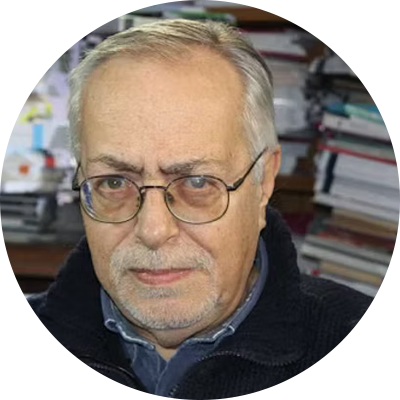
Former professor of Economic History in the Department of Literature, Languages, Classical and Modern Civilizations at the University of Perugia, he previously taught Contemporary History, Social History, and History of the City and Territory at the Faculty of Arts and Philosophy in Perugia. He is the director and vice-president of the Franco Momigliano Institute for Business Culture and History, president of the Italian Association for Industrial Archaeological Heritage, and has specialized in the economic history of Fascism, industrial history, and territorial history, with particular focus on Umbria. Of his numerous books and essays, we mention just a few: From Green Umbria to Red Umbria, in History of Italy. The Regions from Unification to Today. Umbria, edited by Renato Covino and Giampaolo Gallo, Turin, Einaudi 1989, pp. 509-605; The Invention of a Region. Umbria from the 19th Century to Today, Perugia, Quattroemme 1995, pp. 141; Between Two Centuries. Umbria in the Last Twenty Years, Perugia, Crace, 2007, pp. 160; The Countryside. From the Balance of Sharecropping to a New Agriculture, in History of Umbria from Unification to Today, edited by Mario Tosti, vol. 1, Men and Resources, Marsilio, Venice 2014, pp. 107-150; Domenico Arcangeli, in Stories of the Valnerina. Women and Men of the 20th Century, edited by Renato Covino, Il Formichiere Foligno, 2018, pp. 41-52.
Moderator: Maura Marchegiani (University for Foreigners of Perugia)
Discussant: Alberto Stramaccioni (University for Foreigners of Perugia)
Wednesday, September 24, 2025, 10:30 AM–1:30 PM
Piero Bevilacqua
Professor of Environmental History – Sapienza University of Rome
Inland Areas, Migration, Environmental Balance
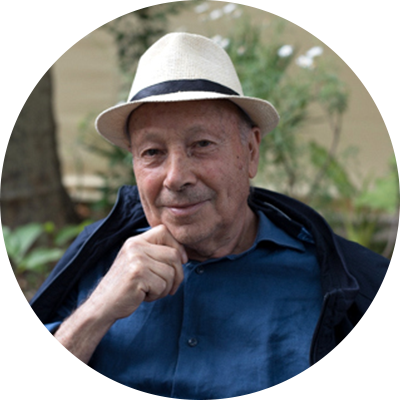
Piero Bevilacqua, who for many years was Full Professor of Contemporary History at Sapienza University of Rome, founded the Southern Institute of History and Social Sciences (IMES) and the journal "meridiana" in 1986 together with Carmine Donzelli, Augusto Placanica, Salvatore Lupo, and other scholars. Since the early 2000s he collaborated with Carlo Petrini, Vandana Shiva, Massimo Montanari, and others in founding the University of Gastronomic Sciences in Pollenzo and in the Slow Food project for a Faculty of Agroecology. He has served as a member of the Scientific Committee of the Réseau National des Maisons des Sciences de l'Homme in Paris. Among his many works, notable titles include Demeter and Clio. Man and the Environment in History (Donzelli, Rome 2001); The Cow Is Wise. Historical Reasons for the European Food Crisis (Donzelli, Rome 2002); The Great Plunder. The Age of Destructive Capitalism (Laterza, 2012).
Moderator: Naomi Camardella (University for Foreigners of Perugia)
Discussant: Filippo Sbrana (University for Foreigners of Perugia)
Thursday, September 25, 2025, 10:30 AM–1:30 PM
Filippo Barbera
Professor of Development Sociology – University of Turin
The Many Faces of Italian Territorial Diversity: The Fragility of the Inland Areas
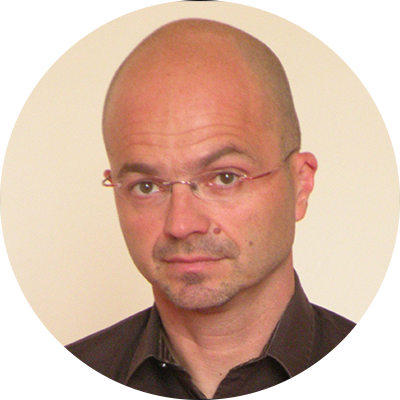
Filippo Barbera is professor of economic sociology at the Department of CPS at the University of Turin and a member of the assembly of the Forum on Inequality and Diversity. Among his recent publications are Against the Villages: The Belpaese That Forgets Its Small Towns (edited by D. Cersosimo and A. De Rossi, Donzelli, 2022) and The Empty Squares (Laterza, 2023). His current research projects focus on the regeneration of the public sphere and the analysis of fundamental economy experiments in providing citizenship goods and services.
Moderator: Salvatore Cingari (University for Foreigners of Perugia)
Discussant: Maria Dentale (University for Foreigners of Perugia)
Dates to be determined.
Tonino Perna
Professor of Economic Sociology, University of Messina
Extreme events: origins of major fluctuations in weather and finance
Laura Marchetti
Professor of Anthropology, University of Foggia
Protection of intangible heritage and landscape regeneration
Elio Garzillo
Archaeologist
Earthquake management and cultural heritage
Scientific and Organizational Direction
Salvatore Cingari, Alessandro Simoncini, Rita Silvestrelli
University for Foreigners of Perugia