Cerca nel sito

PE8_11 Environmental engineering, e.g. sustainable design, waste and water treatment, recycling, regeneration or recovery of compounds, carbon capture & storage

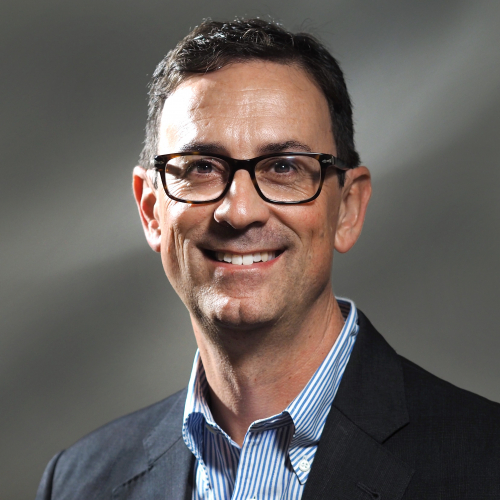
Francesco Asdrubali

Francesco Asdrubali

Docente
Professore di I fascia
IIND-07/B (ex ING-IND/11)
Dipartimento di Scienze umane e sociali internazionali (SUSI)

RiverWatch: a citizen-science approach to river pollution monitoring

SSD: ICAR /02

Durata: 

Under unprecedented pressure from urbanization and climate change, an ever increasing number of streams worldwide fails to meet good ecological status, thus threatening water quality and ecology, and severely impacting our territories. In this vein, RiverWatch aims to develop a new disruptive monitoring infrastructure for river systems focused on the transport of buoyant plastics, woody material, and floating pollution. The infrastructure will build on current knowledge in image-based hydrological monitoring to explore novel advancements in unsupervised computer vision techniques for environmental analyses. RiverWatch will exploit camera systems on fixed stations as well as volunteer smartphones to build a dense network of monitoring stations potentially along any river system in the world. This may help to overcome the current limitations in the management and maintenance of high cost installations and at the same time allow us to expand our monitoring capabilities. Towards establishing a robust infrastructure, RiverWatch will focus on the Sarno River to develop a dense monitoring system based on cutting-edge unsupervised computer vision.

Notably, the Sarno River is the most polluted river in Europe and a challenging and socially disadvantaged environment to establish monitoring networks. A custom-built mobile app as well as advanced image-based algorithms will be developed to process footage captured by citizens and fixed cameras and collected at a remote server. Image-based algorithms will enable analysis of the river flow along with the estimation of surface pollutants discharge and their characterization. Such data will be published in close to real-time on a web-Gis online platform featuring a storymap and a public database. High-frequency data at several locations in the drainage network will facilitate implementation of simple modeling tools to describe and forecast pollutant transport in the Sarno watershed. RiverWatch objectives will be achieved through the harmonized effort of a multidisciplinary research team with a past experience of collaboration in environmental monitoring through computer vision and machine learning as well as citizen science. The transformative potential of the project is expected to enrich the monitoring tools currently available to National Hydrometric Services and Environmental Agencies worldwide by providing an easy-to-use and inexpensive approach to quantitatively assess river pollution. Finally, RiverWatch will stimulate new research on the pollution dynamics in river watersheds and on the interactions of pollutant transport with climate and anthropic agents.

Attività / Fasi del progetto: 

Work packages The RU at UniTus will coordinate the project, design and develop the citizen science initiatives, and collaborate on algorithm development as well as closely work with the other RUs throughout the entire duration of the project. UniBo will develop the mobile app, the imageprocessing algorithms, and coordinate the remote server for image processing. UniNa will coordinate implementation of the fixed camera prototypes, execute validation experiments, and collaborate on algorithm development. UniStraPg will collaborate on the design of the citizen science initiatives, and help with the development of the web-Gis platform. The project will be organized in the following work packages (WPs):

1. Citizen Science initiatives (UniTus & UniNa & UniStraPg): This WP entails the design of the initiatives aimed at involving volunteer citizens: selection of the possible pools of volunteers, preparation of explanatory material and presentation of the RiverWatch mobile app. Tasks include identification of key actors as potential citizen scientists, involving schools and associations, preparing material and organizing meetings and presentations.

2. Fixed camera prototypes installations (UniNa & UniTus): This WP entails the design of lowcost camera prototypes to be permanently installed along key sites of the Sarno drainage networks. Tasks include site selection, prototype design and assembly, coordination with local authorities for installation 3. Mobile app and image-based algorithms development (UniBo & UniTus & UniNa): This WP entails development of the mobile app as well as image-processing algorithms and protocols for extracting hydraulic and pollution information from images. Tasks include image selection, filtering, eventual enhancement, code development and validation.

4. Data validation (UniNa & UniTus): This WP entails development of strategies to validate image-based estimations with data available from fixed camera stations and through dedicated field campaigns at key sites in the Sarno drainage networks. Tasks include collecting data with diverse measurement systems, aggregating them at diverse spatial and temporal resolutions, selecting image training and validation sets, designing and developing codes.

5. Management of the remote server (UniBo & UniTus): This WP entails devising a strategy to manage volunteer and fixed camera videos in real time, applying image processing algorithms and uploading results to the web-Gis platform. Tasks include collecting data, ensuring video compatibility, extracting metadata information (from the phone GPS and accelerometer), applying and developing codes.

6. Modeling pollutant transport (UniNa & UniTus): This WP entails developing a simple modeling framework to describe and forecast pollutant transport in the Sarno drainage network. Tasks include testing and validating algorithms and selecting and aggregating data.

7. Development of the web-Gis platform (UniTus & UniStraPg): This WP entails designing and developing the web platform for showcasing and downloading processed (and selected raw) data. Tasks include developing codes, devising a strategy to communicate with the remote server, and regularly updating the website.

8. Dissemination and communication of results (UniTus, UniBo, UniNa, & UniStraPg): this WP entails paper preparation, data publication in open repositories, participation and organization of conferences, sessions, and special issues, and development of educational activities for students from the middle-school to graduate level.

9. Project management (UniTus): this WP entails regular scheduling, clear task distribution and assignment of responsibilities, and transparent treatment of delays and difficulties. Regular reporting and close communication will enable the PI to closely monitor the quality of the project.

Coordinatore: 

Prof.ssa Chiara Biscarini

Team: 

Flavia TAURO (Principal Investigator ) Università degli Studi della TUSCIA
Chiara BISCARINI - Università per Stranieri di Perugia     
Matteo POGGI   - Università degli Studi di BOLOGNA
Salvatore MANFREDA     Università degli Studi di Napoli Federico II

CHOISIS - Caratterizzazione di materiali isolanti innovativi e sostenibili

SSD: ING-IND/11

Durata: 

Choisis Logo


La riduzione dei gas serra nel settore edilizio, secondo gli obiettivi dell’UE, può essere raggiunta solo attraverso un processo adeguatamente informato, che fornisca una serie di procedure, metodologie, dati che supportino professionisti e produttori nell’adozione di materiali nuovi e più efficienti dal punto di vista energetico e sostenibili e soluzioni. Il progetto CHOISIS è finalizzato a supportare la transizione verde nel settore dell’edilizia rendendo disponibili metodologie, procedure validate, metriche, strumenti e dati per la caratterizzazione energetica, ambientale ed economicamente vantaggiosa dei materiali più innovativi per l’isolamento dell’involucro edilizio, recentemente entrati nel mercato. 

Finalità: 

La riduzione dei gas serra nel settore edilizio, secondo gli obiettivi dell’UE, può essere raggiunta solo attraverso un processo adeguatamente informato, che fornisca una serie di procedure, metodologie, dati che supportino professionisti e produttori nell’adozione di materiali nuovi e più efficienti dal punto di vista energetico e sostenibili e soluzioni.

Il progetto CHOISIS è  finalizzato a supportare la transizione verde nel settore dell’edilizia rendendo disponibili metodologie, procedure validate, metriche, strumenti e dati per la caratterizzazione energetica, ambientale ed economicamente vantaggiosa dei materiali più innovativi per l’isolamento dell’involucro edilizio, recentemente entrati nel mercato.

Attività / Fasi del progetto: 

Il progetto si compone di cinque linee principali: 

1) Procedure e metriche per la caratterizzazione termica, in stato stazionario e transitorio, di nuove soluzioni su scala di materiale/componenti. Questa fase si concentrerà sullo sviluppo e sull'implementazione di procedure di caratterizzazione, a livello di materiale e di componenti su piccola scala, dei diversi materiali avanzati e sostenibili oggetto di studio. Le misurazioni renderanno inoltre disponibili dati per validare procedure (sia sperimentali che numeriche) volte a supportare i produttori nel processo di ottimizzazione.

2) Dal laboratorio alla caratterizzazione sperimentale in situ. La misurazione delle prestazioni effettive in condizioni operative reali non è un compito banale quando i materiali sono caratterizzati da specifici comportamenti igrotermici o da un comportamento dinamico. I dati sono necessari per convalidare i modelli e ridurre il divario tra i risultati attesi e quelli effettivi. Nuove soluzioni su scala di materiali/componenti su casi di studio reali verranno quindi testate mediante indagini in situ, utilizzando un adeguato apparato sperimentale. 

3) Valutazione del comportamento dinamico di componenti altamente disomogenei. Le prove dinamiche di materiali disomogenei non sono coperte da alcuno standard, pertanto, per colmare questa lacuna verrà analizzato un approccio sperimentale e un'indagine fluidodinamica computazionale (CFD). 

4) Questioni ambientali ed economiche. La valutazione dei reali vantaggi dei materiali e dei componenti innovativi deve includere un'analisi delle loro prestazioni energetiche e ambientali nel ciclo di vita (ecoprofili), nonché dei costi del ciclo di vita. A questo scopo verranno applicate metodologie di Life Cycle Assessment (LCA), a partire dagli esiti delle precedenti fasi di ricerca e grazie alle Dichiarazioni Ambientali di Prodotto (EPD) e ai dati di mercato. 

5) Diffusione. La diffusione garantirà la corretta comunicazione dei risultati e una migliore penetrazione nel mercato delle soluzioni avanzate proposte, attraverso articoli scientifici e canali che raggiungano un pubblico più ampio (workshop e social media). 

Risultati attesi: 

Al termine del progetto CHOISIS si prevedono i seguenti impatti scientifici, tecnici, sociali ed economici:

a) Impatti scientifici

L’adozione di nuovi materiali avanzati nei componenti edilizi richiede nuove metriche prestazionali al fine di rendere possibile un confronto diretto con i materiali attualmente utilizzati, facilitando così una scelta progettuale orientata alle prestazioni. Ciò implica lo sviluppo di procedure di misurazione su misura, in base ai diversi materiali avanzati, tenendo conto delle specifiche caratteristiche e proprietà termo-fisiche. Le nuove procedure di caratterizzazione di laboratorio che saranno sviluppate nell'ambito del progetto saranno più accurate, affidabili e progettate specificamente per le applicazioni dell'involucro edilizio. L'impatto scientifico riguarderà anche aspetti teorici, con un avanzamento delle conoscenze nella simulazione di pareti multistrato in condizioni dinamiche; un nuovo set di dati di laboratorio sui componenti edilizi supporterà lo sviluppo e la valida validazione di procedure di calcolo semplificate.

L’impatto scientifico del progetto sarà potenziato a livello nazionale attraverso il collegamento con le principali Associazioni scientifiche del settore (ATI; AIA; AICARR), e a livello internazionale dalla pubblicazione di articoli su riviste scientifiche e dalla partecipazione a convegni internazionali.

b) Impatti tecnici

La definizione di nuovi indicatori chiave di prestazione (KPI) e di nuove procedure di misurazione contribuiranno a supportare lo sviluppo di nuove soluzioni tecnologiche ottimizzate per l’efficienza energetica dell’involucro edilizio. La possibilità di scegliere tra un'ampia gamma di materiali avanzati aiuterà i professionisti a scegliere la migliore soluzione tecnologica e ad adattarla ai diversi climi italiani e agli usi edilizi.

Inoltre, il progetto contribuirà all'ottimizzazione e al miglioramento degli attuali sistemi di involucro edilizio che beneficeranno dei risultati di laboratorio e della definizione di nuovi KPI.

I risultati del progetto verranno forniti agli organismi di normazione, vista la partecipazione di alcuni membri delle Unità di Ricerca ai Comitati tecnici UNI e ISO.

Un altro importante impatto tecnico è dovuto all'approccio LCA, che orienterà la progettazione dei materiali/componenti indagati concentrandosi sui vantaggi energetici, ambientali ed economici; tale approccio contribuirà a minimizzare i costi economici e ambientali lungo il ciclo di vita dei materiali e dei componenti.

c) Impatto economico

Il settore dell'edilizia è strategico per quanto riguarda gli investimenti, poiché caratterizzato da un effetto moltiplicatore che dati recenti stimano da 1,9 a 2,9 nei paesi dell'Unione Europea. L'adozione di nuovi materiali e soluzioni aumenterà il potenziale di retrofit, anche per quegli edifici in cui le tradizionali soluzioni di retrofit non sono fattibili (vincoli tecnologici, spazio limitato per l'isolamento, ecc.). Ciò creerà nuove opportunità di lavoro e opportunità di penetrazione del mercato più ampie, i cui benefici non saranno solo per i produttori di materiali, ma anche per tutti gli altri stakeholder del settore delle costruzioni.

Un altro impatto economico positivo nell'uso di materiali avanzati per l'isolamento delle pareti interne è il risparmio di una superficie significativa nello spazio interno, grazie allo spessore più sottile. Ciò si traduce in una maggiore superficie utile e in un maggiore vantaggio economico derivante dall'affitto dello spazio o dalla vendita dell'edificio.

L'approccio globale del progetto mira a fornire ai decisori pubblici (governo ed enti pubblici locali) un quadro decisionale aggiornato e completo, al fine di allocare in modo più razionale le risorse negli interventi di retrofit edilizio, tenendo conto di diversi aspetti e di alternative edilizie di retrofit (prestazioni termiche, impatto ambientale, costi).

Il progetto contribuisce alle strategie di economia circolare e di eco-design poiché alcuni dei materiali sostenibili che verranno studiati utilizzano meno risorse naturali e vengono riciclati; ciò può comportare il miglioramento del mercato della bioedilizia.

d) Impatti sociali

Il progetto mira a fornire una soluzione su misura per la ristrutturazione e la nuova progettazione del patrimonio edilizio italiano.

Le questioni sociali e ambientali come la salute pubblica, la riduzione delle emissioni di gas serra, la disoccupazione, le economie locali e la povertà energetica possono trarre vantaggio dai risultati del progetto.

La povertà energetica, ad esempio, può essere ridotta grazie all’implementazione di materiali avanzati che ridurranno i costi di retrofit rendendo le soluzioni di retrofit adatte anche ai proprietari a basso reddito

Il progetto migliorerà la salute pubblica grazie ai nuovi materiali che miglioreranno il comfort interno, la luce del giorno e l'acustica. Ciò può tradursi in un miglioramento della salute fisica e della produttività, considerato che trascorriamo il 90% della nostra vita all’interno di un edificio

Documentazione: 

 - Locandina XXIV congresso nazionale CIRIAF da cui risulta una  sessione dedicata alla divulgazione del progetto CHOISIS;

- Presentazione progetto al Congresso Internazionale "The role of environmental product declarations in the decarbonization of building materials and components"


Notizie / Eventi / In evidenza: 

Partecipazione a congressi

Francesco Asdrubali, Dante M. Gandola, The role of environmental product declarations in the decarbonization of building materials and components, Net Zero Future conference, Oslo, 19-21 June 2024

Eventi di divulgazione

Presentazione del progetto nell’ambito della Sessione “Efficienza energetica e materiali innovativi per il benessere ambientale”, XXIV Congresso Nazionale CIRIAF, Perugia, 11-12 aprile 2024

Coordinatore: 

Prof. Francesco ASDRUBALI

Team: 

Università per Stranieri di Perugia

Francesco Asdrubali

Dante Maria Gandola

Chiara Chiatti

Politecnico di Torino

Valentina Serra

Stefano Fantucci

Università Roma Tre

Roberto de Lieto Vollaro

Leone Maria Barbaro

Università di Perugia

Giorgio Baldinelli

BIO-EMBRACE "BIO-inspired Experimental and nuMerical BRidge pier Analysis for an innovative scour protection deviCE"

SSD: Icar/02

Durata: 

Bridges are fundamental elements of our infrastructure system, indispensable for the effective movement of people and goods in territories with varied orography and often high seismic, hydraulic and geomorphological risk. The natural degradation of materials, accelerated by the aggressive environmental conditions, inefficient maintenance and construction flaws are reasons why the current infrastructural heritage requires a great deal of attention in order to identify the most critical situations and prevent the occurrence of adverse events. This proposal has drawn inspiration from recent field experiences in order to select protection, management, and maintenance measures that have immediate applications to real emergency situations. In particular, it is focused on the river flow dynamics, which plays an important role in riverbed morphology. Building a bridge pier along the river alters its cross-section, causing a change in the water flow. These changes are mainly responsible for pier scour that represents the main cause of bridge failures. We propose the application of an innovative device that will act as an intensity damper of the vorticity generated by the complex dynamics occurring at the intersection between the bottom of the channel and the obstacle. BIO-EMBRACE aims at analyzing the flow dynamics at different flow regimes and the boundary conditions between the water flow and the bridge pier, through a novel, hybrid, multiscale approach. The final deliverable of the project will be the design and testing of an innovative device able to eventually reduce scour. We will develop an integrated theoretical-numerical-experimental methodology merging the experience of the partners in their areas of expertise, namely the fluid dynamics simulation and the experimental techniques. The numerical simulations will be conducted both through traditional Computational Fluid Dynamics (CFD), and two particle based numerical methods, the Lattice Boltzmann Method (LBM) and the Smoothed Particle Hydrodynamics (SPH), given the expertise in this field of all the operating units involved. The numerical simulations, appropriately validated, will support the definition of models, which could be easily applied for design purposes.

Finalità: 

The innovation of the project is related to the need to fill these gaps, addressing all three issues together, making them inseparably linked.    As a further, important outcome of the project, there will be the patenting and possible commercialization of the novel, bio-inspired bridgelet devices to be installed as a retrofit countermeasure for existing piers. The commercialization of such novel devices will deeply impact on the overall safety and maintenance sector, allowing to boost the performance of the present Disaster Risk Management facilities and promoting novel and safer standards for the engineering design and realization of new bridges.  Such new design paradigm besides promoting the safety, will also open the path towards the realization of structures easier to be monitored, with the capability of harvesting energy directly from the water flow, an emerging field in the technological research. This opportunity could revolutionize the approach to renewable energy and energy conservation, allowing to directly obtain usable energy from a massive, but unexploited source. The project will also provide new answers to the compelling problem of sustainable and clean energy generation, without impacting the natural resources.  In conclusion this project is characterized by a huge scientific and socio-economic impact, in different fields ranging from the hydraulic safety of existing piers, to the development of novel standards for the bridge design and maintenance. 

One of the most interesting aspects of BIO-EMBRACE lies in the bio-inspiration of the countermeasures that will be devised: the design of the proposed device derives from nature and more specifically from the particular deep-sea, glass sponge Euplectella aspergillum, whose remarkable structural and fluid dynamic performance have inspired several important works in the scientific literature. It is worth underlining that the research units involved in the present project have already successfully collaborated in the past, as highlighted by the several publications in co-authorship reported in the CV of the scientists involved. Moreover, most of the people involved have already applied their field of expertise to fluid-structure problems. 

Risultati attesi: 

The project impact is broad from several points of view. The first important impact is expected in the area of risk assessment concerning bridge vulnerability. Italy is a territory full of large-, medium- and small-scale rivers, with many of them crossing man-made artifacts, sometimes even of historical importance. Through BIO-EMBRACE, unified guidelines to better assess the risk related to different flow regimes with respect to the characteristics and condition of the obstacle structure will be delivered, with the risk matrix as an OpenAccess tool for Public Institutions and private companies. Such an instrument will hugely impact the readiness of a territory to promptly react to disastrous events, hence delivering important economic, but above all, societal benefits.   From a scientific point of view, the novel, hybrid methodology “massively” scalable for HPC, real-world case studies will provide a breakthrough “per-se", with potential, broad fall-outs even in different fields from that under investigation: free-surface and multiphase flows, in general, are in fact ubiquitous and their applications are uncountable. Similar, huge repercussion will be achieved by the results of the experimental campaign, that will prompt a huge, OpenAccess dataset, that will turn of great utility for both Public Institutions and private companies.   On top of that, the possibility to make direct comparison of the novel, hybrid methodology with the experimental results  will allow to also set a new scientific and technological paradigm for the new engineering standards in this field. To date, an integrated methodology for the reliable analysis of free-surface fluid-structure interaction is missing. This is due to the scarcity of experimental data, to the lack of numerical models of fluid-structure interaction at the same time accurate and with acceptable computational costs and to the absence of reliable theoretical models to be used in the design phase.

Coordinatore: 

Chiara Biscarini - Università per Stranieri di Perugia

Team: 

Chiara Biscarini - Università per Stranieri di Perugia

Valentino Santucci - Università per Stranieri di Perugia

Giacomo Falcucci - Università degli Studi di ROMA "Tor Vergata"

Andrea Colagrossi - Consiglio Nazionale delle Ricerche

Salvatore Marrone - Consiglio Nazionale delle Ricerche

Back to top