Educating for sustainability means, first and foremost, teaching how to understand the complexity of the reality we live in: the interdependence between environment, economy, rights, cultures, and society.
In our teaching, attention to sustainability is integrated throughout our entire educational offering, with themed meetings and modules dedicated to the various social, economic, and environmental aspects of sustainability.
It is especially through the Bachelor’s degree program in Social Sciences for Sustainability and International Cooperation that the University’s commitment to educating for sustainability is realized in a more specific and focused way. This degree program aims to train citizens and professionals capable of thinking critically, connecting knowledge, and acting responsibly.
This is a highly innovative program that combines the humanities and technical sciences, with the goal of preparing future professionals to acquire cross-disciplinary skills in social analysis, conflict mediation, international cooperation, and cultural and scientific diplomacy.
The degree program offers the teaching of traditional subjects such as history, law, philosophy, and sociology in a new way, linking them to real-world challenges — such as climate change, inequalities, artificial intelligence, international cooperation, risk and emergency reduction — with the methodological rigor and critical depth typical of university education, which represents a valuable tradition but needs to be updated and reimagined to make culturealive and useful for the future.
The main goal is to promote a holistic vision by offering a solid foundation of knowledge and ongoing dialogue between different fields and disciplines, thus providing the tools to understand complexity, encourage interconnection between disciplines, and develop critical thinking to be applied to real life.
Degree course in Social Sciences for Sustainability and International Cooperation
Regenerating an area holds deep significance, as it does not merely mean restoring its material aspect, but also relationships, memory, justice, and identity.
And perhaps this is precisely the added value of the Level I Master’s Degree in Urban and Territorial Regeneration, which does not provide only specialized technical training, but aims to educate professionals capable of interpreting reality in all its complexity,
- who are therefore able to analyze the effects of an earthquake or a landslide, but also their impact on society
- who implement an urban master plan, but do so with respect for a cultural history
- who propose an energy model and at the same time a social transformation
And regeneration and urban and territorial redevelopment are fully part of the process underlying our concept of sustainability and the many initiatives of the Fenice Project, which aims to provide an education that does not stop at transmitting knowledge or content, but seeks to DESIGN MEANINGS, TO GENERATE VISIONS. And ultimately, this is the truest and most authentic responsibility of the Academy, which should increasingly become a real intellectual worksite, where the natural intelligence of places, the artificial intelligence of technologies, and the collective intelligence of communities can, in a complementary way, fill the transmission of knowledge with sense and meaning.
At the heart of this Master’s Degree is the idea that territorial regeneration is and must be a cultural project, not just a technical one, which certainly originates from the need for reconstruction after the earthquake, but aspires to become a LABORATORY FOR TERRITORIAL COOPERATION through training pathways.
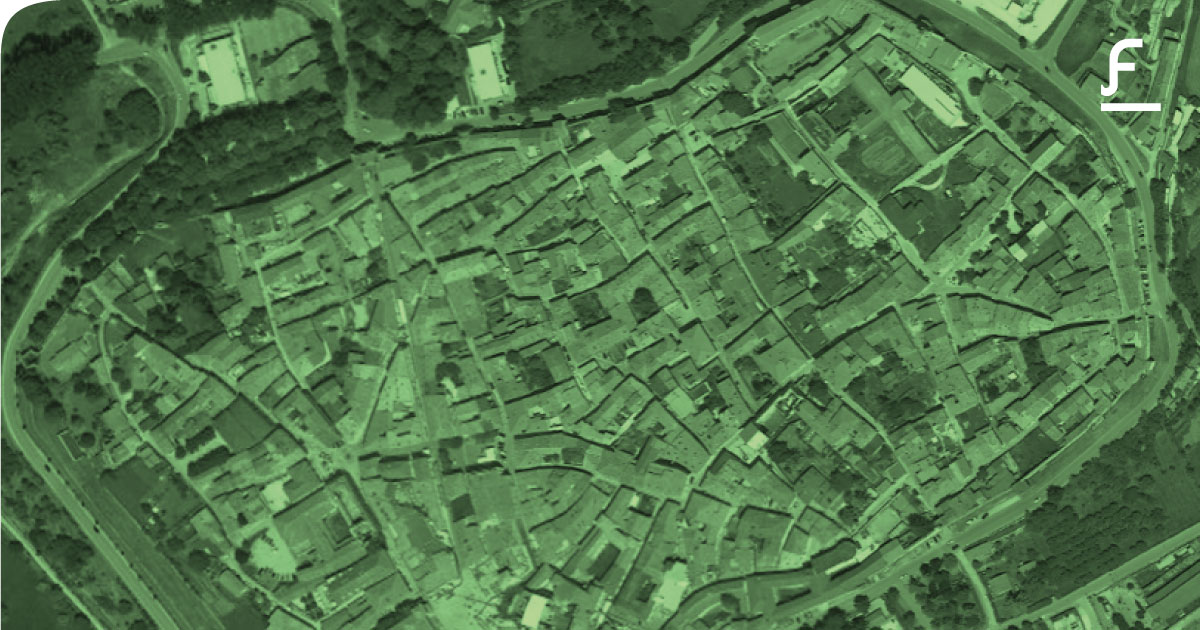
First-level Master in Urban and Territorial Regeneration and Resilience
The theme of sustainability is seen not as a technical compartment but as a meaningful structure, as a mindset that guides a series of projects, intensive courses, and training initiatives, including the Summer School in Inclusion and Sustainability in Vulnerability, which aims to analyze risk management, the consequences of natural disasters, and their impact on the protection of fundamental rights from a transdisciplinary perspective. The idea of "educating to rebuild," of using culture as a driving force for renewal, finds in Norcia an extraordinary "open-air laboratory" that deserves all our attention and all our commitment.