
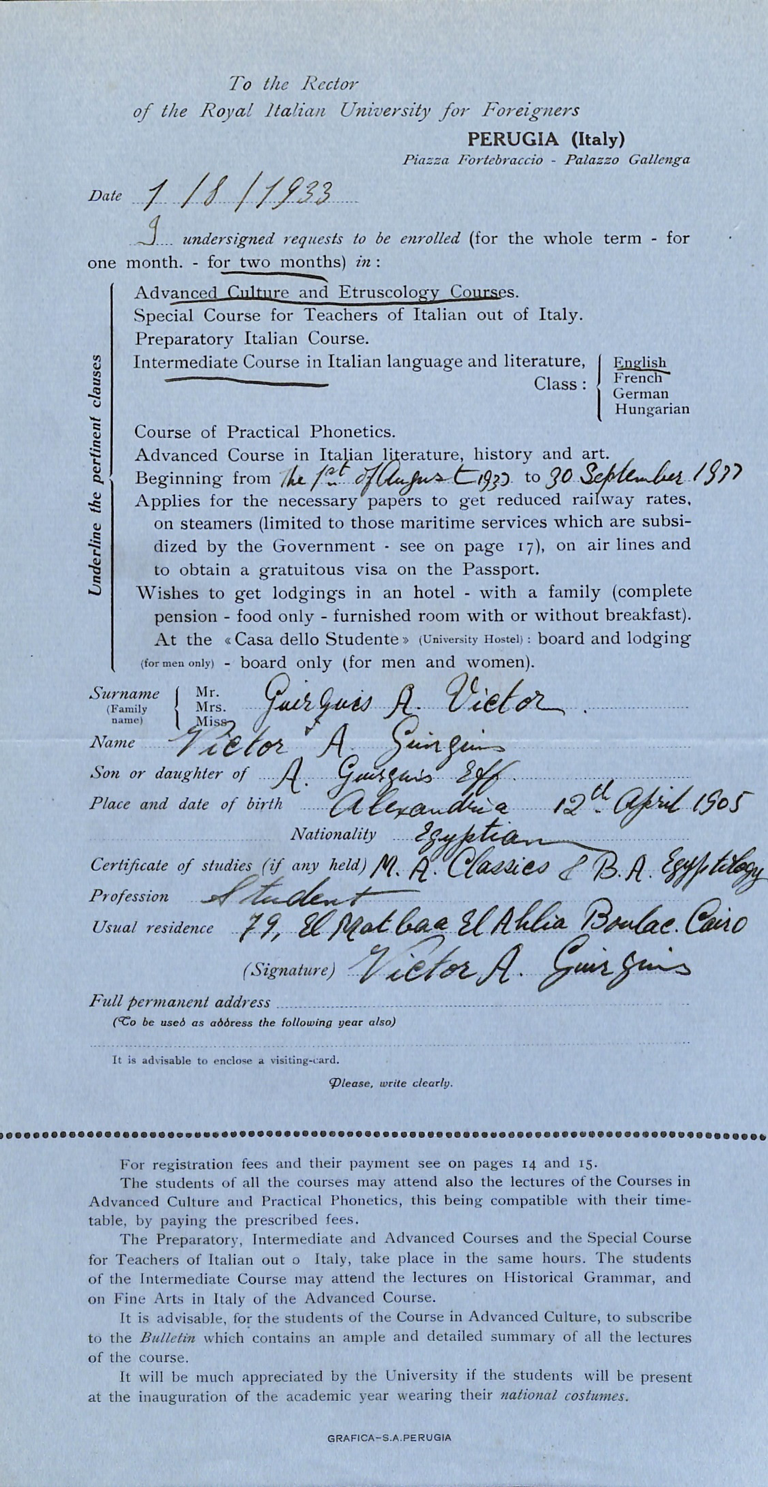
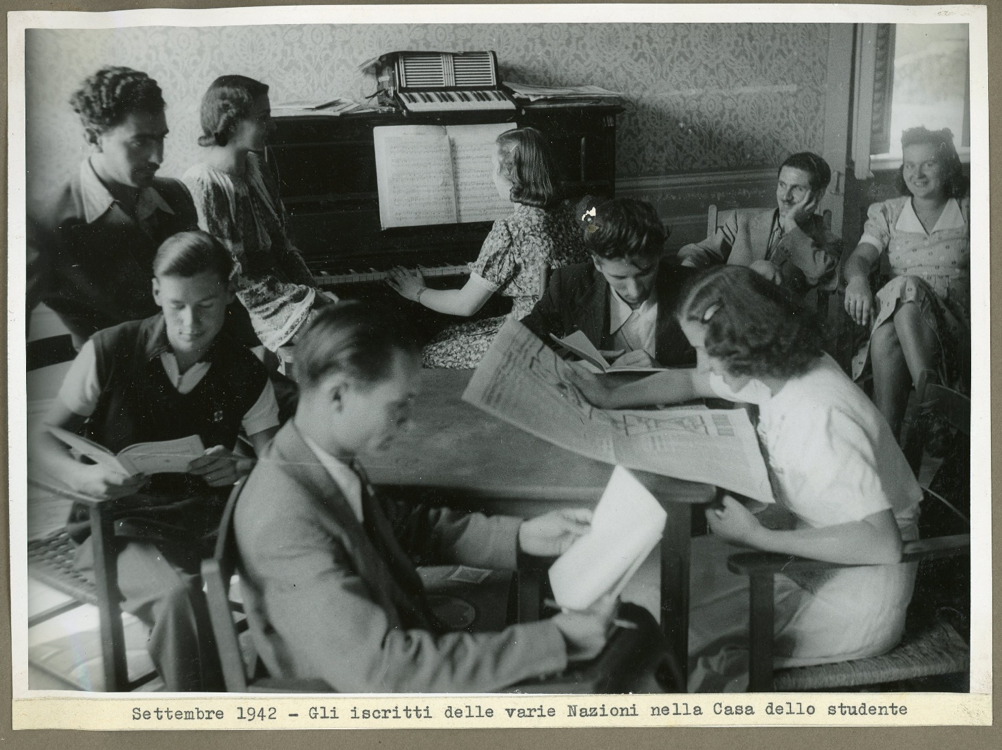

The Historical Archive of the University for Foreigners of Perugia preserves a documentary heritage of enormous interest: in 2019, through the project entitled “Research for the Enhancement of the Historical Archive of the University for Foreigners of Perugia”, co-financed by the Perugia Foundation, a group of university scholars began several studies devoted to the Archive. From these efforts came the volume "The University for Foreigners of Perugia. History of a University Open to the World", published on the occasion of the University's Centenary.
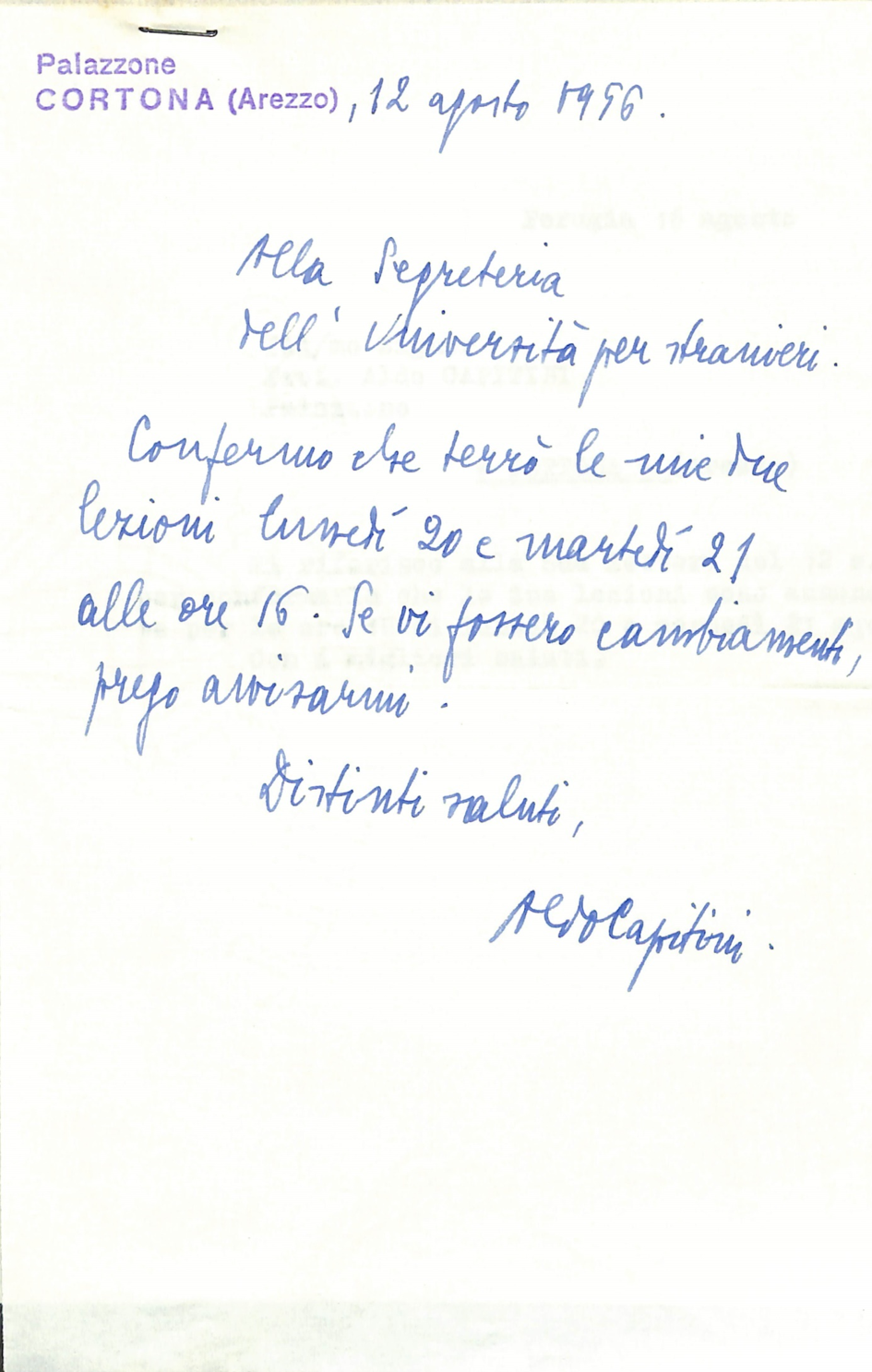
The Archive is divided into series that collect documents of various kinds (Administrative Correspondence, Protocol, "Diaries or Registers of Teachers", Center for Pedagogical Studies, etc.): a description of each of them is available in the Guide to the Historical Archive and on Archimista and Siusa.
For the history and description of the archive, please refer to the SIUSA page (Unified Information System for Archival Superintendencies link) dedicated to the University for Foreigners of Perugia and to the essays by Maurizio Pagano (title and pdf link) and Mori (title and pdf link), published in the aforementioned Treccani volume.
In 2019, a digitization project for the Archive was also initiated with the creation of two databases relating to the “Student Secretariat” and “Exams” series, as well as a Digital Gallery that presents and describes documents and images of significant interest, organized by thematic areas and drawn from various archival series.
The “Exams” series collects the written tests, divided by year, session, and level of enrolled students from 1926 to 1987: it is a rich historical documentation of Italian L2 learning, which has been the subject of several theses and studies.
Databases and digital consultation tools
The Alumni – Unistrapg Historical Archive database allows you to consult the registration records of students enrolled at the University for Foreigners of Perugia from 1926 to 1987.
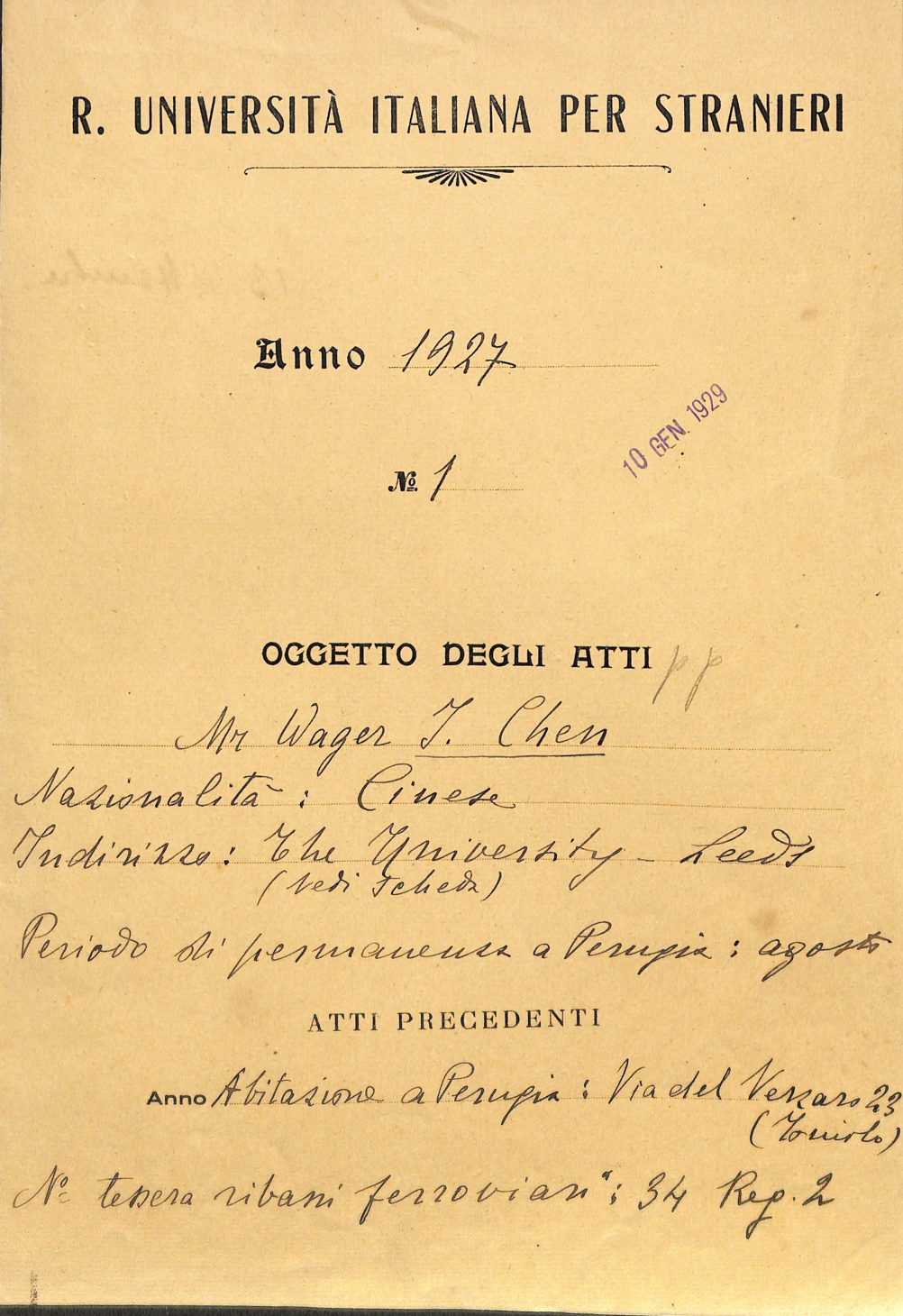
Currently, data regarding 2,681 learners of Italian as a second language have been entered by students, graduates, and interns: each record, in full compliance with privacy regulations, provides the personal and educational details of individual students, organized by nationality (see attached image 4: Alumni record for an Argentine student enrolled at the University for Foreigners of Perugia in 1935).
This way, information on learners’ profiles can be obtained by querying the database by country of origin, age, education, place of residence in Perugia, courses attended, and exams taken.
The Bulletins are also available online [...]
To request access credentials, write to:
roberto.vetrugno@unistrapg.it
gustavo.rella@unistrapg.it
(https://antologiaesamiL2.unistrapg.it)
The “Esami” series collects the written tests, divided by year, session, and level of those enrolled from 1926 to 1987: it represents one of the richest documentations on the history of learning Italian as a second language, to which theses and specific studies have been dedicated.
This is a diachronic textual database that can provide valuable information about the history of Italian language learning by students from all continents. A good number of these tests recount their travel experiences in Umbria and throughout Italy: their impressions of the cities, the people, the language; these are real multi-voiced narratives that tell the story of our country during the twentieth century.
The Prove d’esameL2 database (https://antologiaesamiL2.unistrapg.it), in this initial phase, offers a selection of the most interesting exam papers: an anthology that can be consulted by selecting topics, year, and students, distinguished by nationality, who authored the tests.
The digitization project includes the connection between the two databases Alumni and Prove d’esame L2 (AntologiaesamiL2), making it possible to consult exam papers by accessing the Alumni records, and vice versa.
The tagging of the transcribed texts published in the Anthology is in progress: they will thus be searchable by type (overextension, interference, pre-systematic, post-systematic, etc.) and grammatical categories of L2 errors (orthography, phonetics, morphology, syntax, textuality).
To request access credentials, please write to:
roberto.vetrugno@unistrapg.it
gustavo.rella@unistrapg.it
https://alumni.unistrapg.it/mostre)
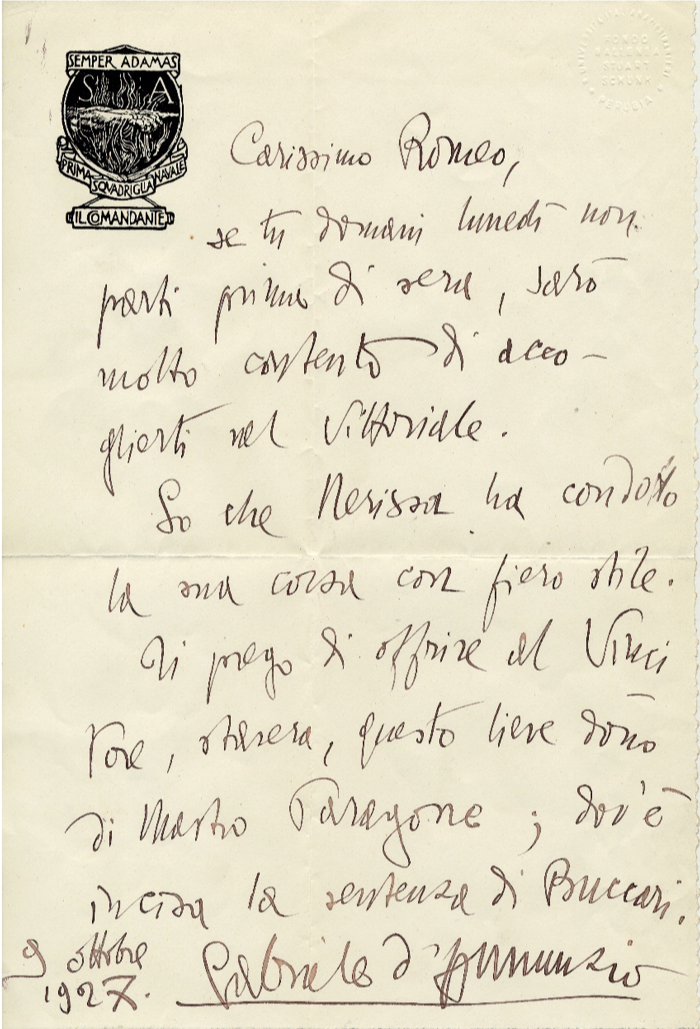
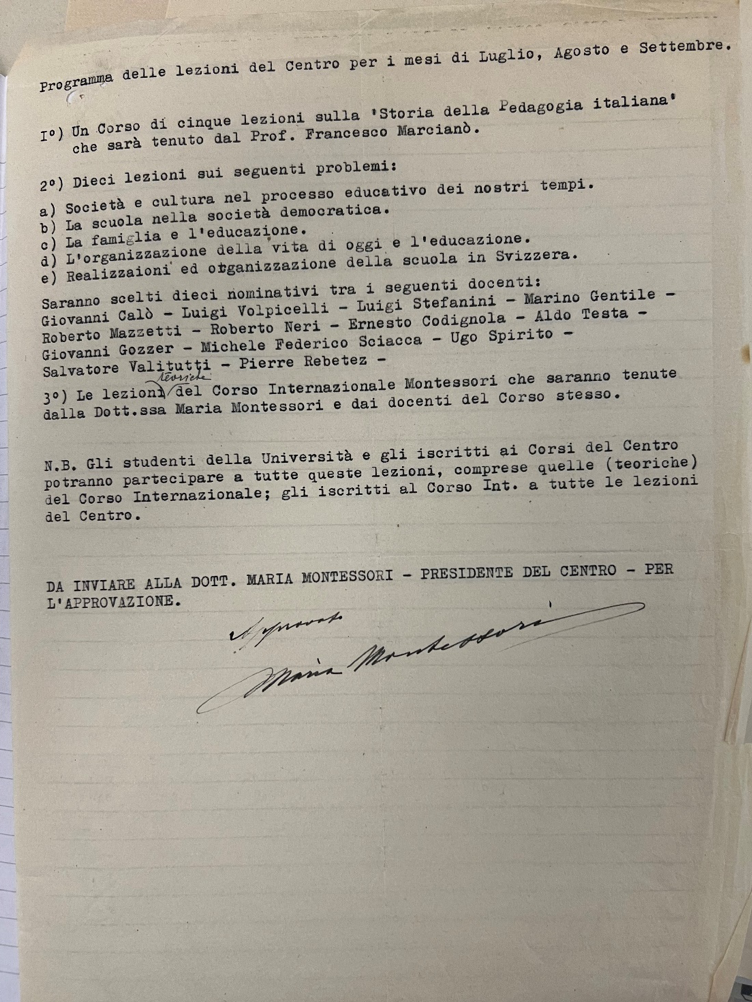
The Digital Gallery of the “Historical Archive” is a virtual exhibition space, divided into thematic sections (or “rooms”), where you can view in high definition the most significant documents preserved by the University, along with their captions. The first room is dedicated to Maria Montessori and her Center for Pedagogical Studies, founded by the great educator at our University in 1951. The second focuses on the friendship between Romeo Gallenga and Gabriele D’Annunzio (see below the section dedicated to the digitization of Romeo Gallenga’s papers available on the website of the Italian Senate).
To request access credentials, write to:
roberto.vetrugno@unistrapg.it
gustavo.rella@unistrapg.it
"Heritage of the Historical Archive - Senate of the Republic"
Collection in collaboration with the University for Foreigners of Perugia
Thanks to the digitization project of the Historical Archive of the Senate of the Republic, it is now possible to access the handwritten documents (letters, essays, narrative and poetic texts, etc.) of Senator Romeo Gallenga.
Digitization and Cataloging of the Photographic and Video Heritage
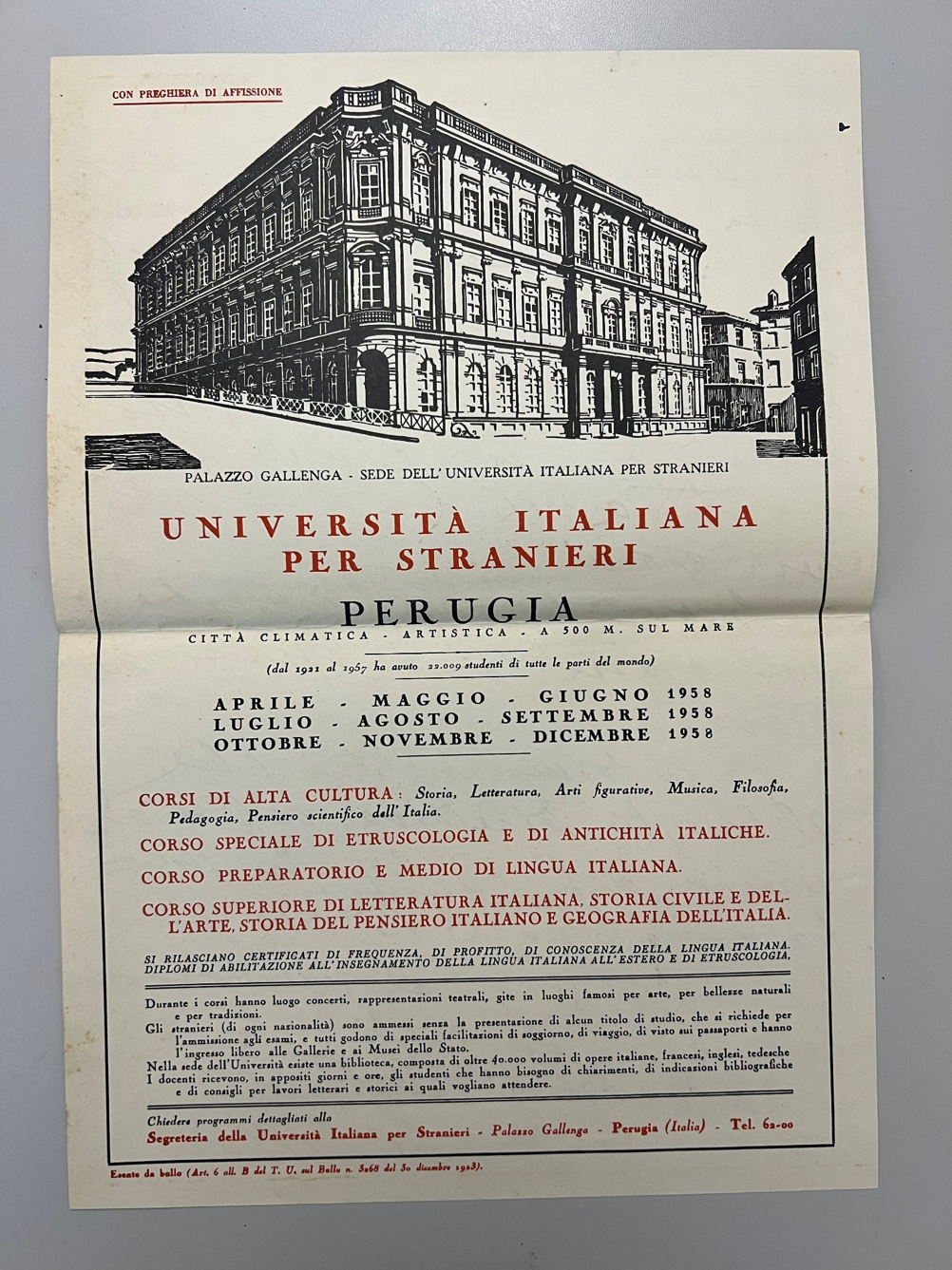
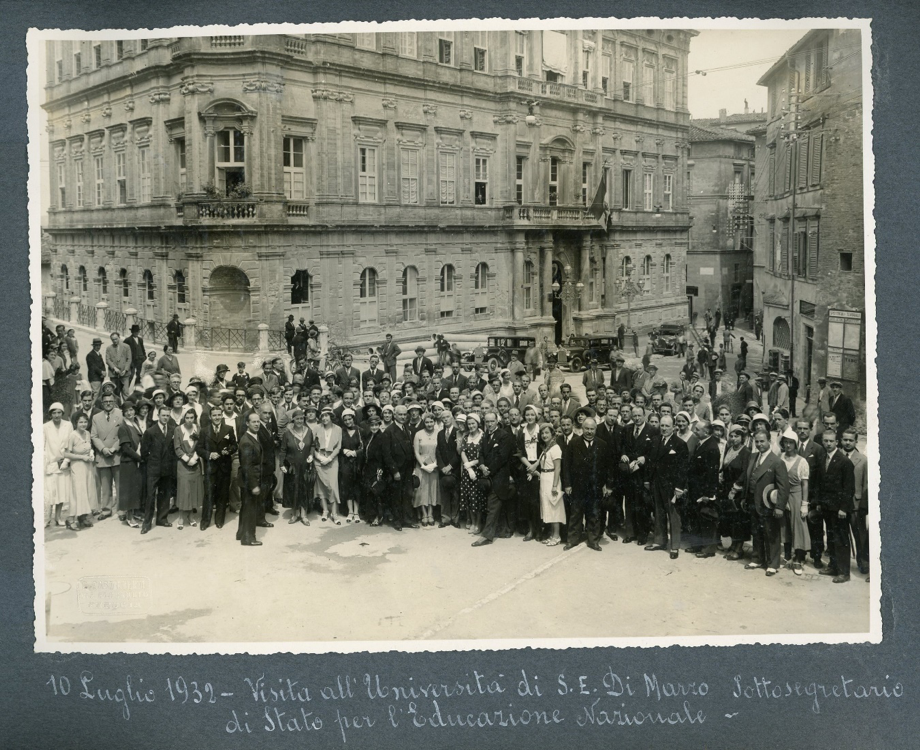
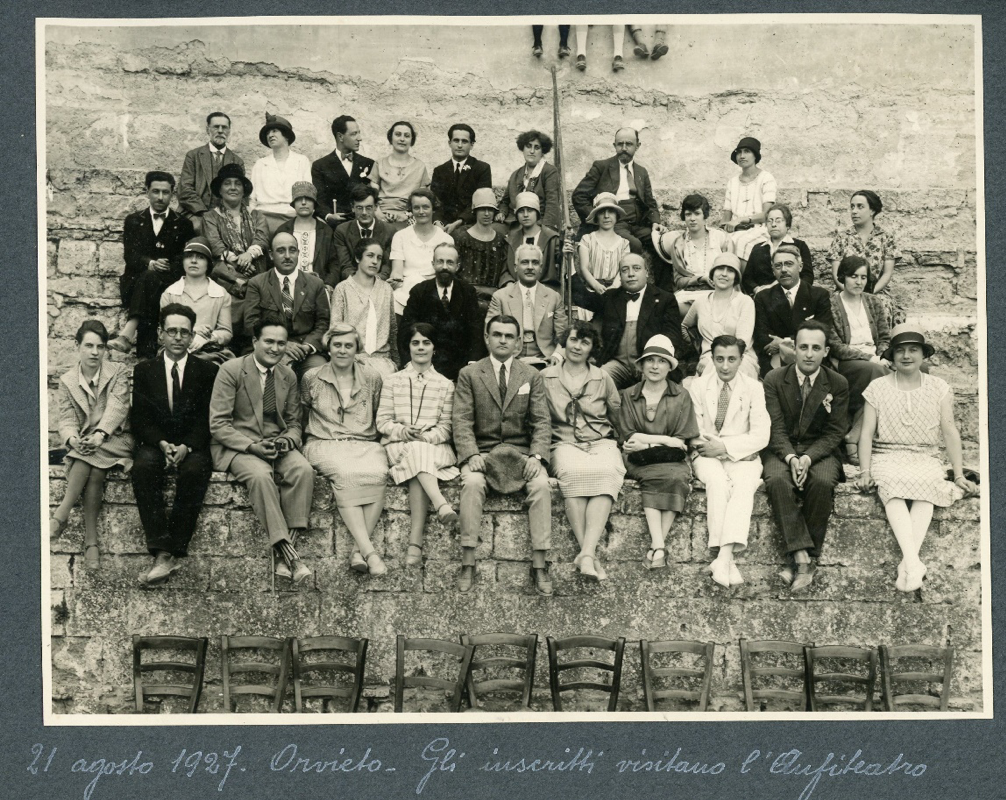
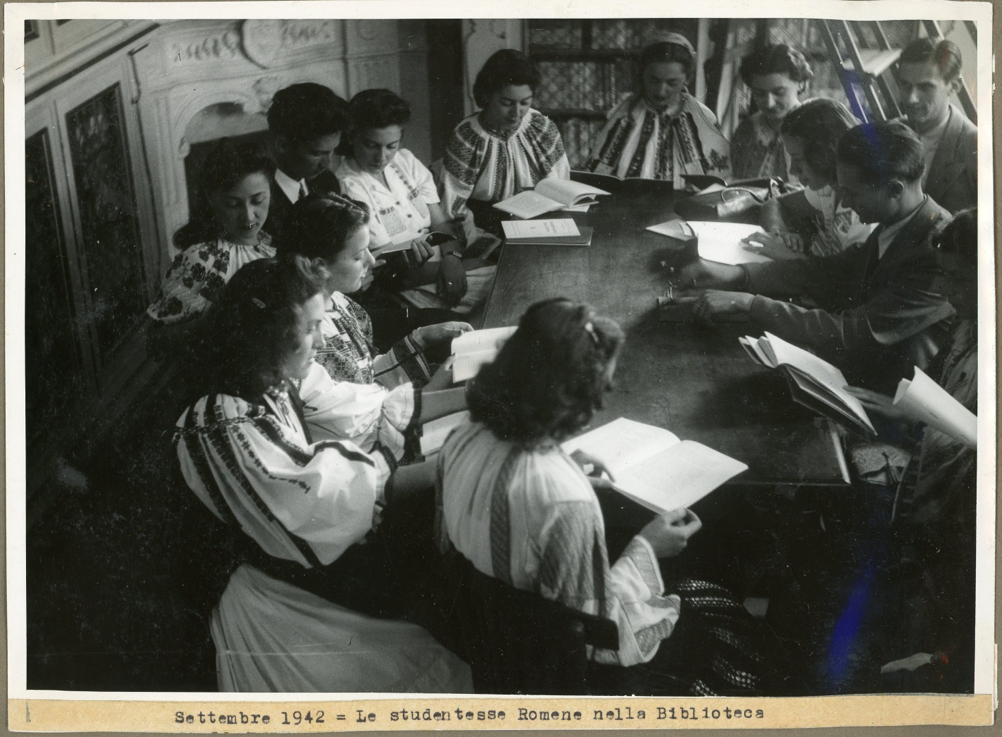
The Archive preserves thousands of photos that tell the story of life at the University for Foreigners throughout the twentieth century: cultural events, lessons, parties and theatrical performances, visits to monuments in Umbria and in Italy, and much more.
The photographic material, currently being cataloged, has been fully digitized in high definition.
For full access to the photographic material, please write to:
michele.schippa@unistrapg.it - roberto.vetrugno@unistrapg.it
The audio and video materials kept at Palazzo Gallenga are also being restored.
The Archimista software allows consultation of the document cataloging currently available: it was developed and implemented in 2023 thanks to the reordering work of Dr. Elisa Famiani and allows researchers to access the descriptions of the various units.